• About the Blogger
  • Healthcare Disclaimer

Fit Past 40 Blog

~ Tips to stay fit, healthy, and young-looking

Fit Past 40 Blog

Monthly Archives: July 2011

High Intensity Training (HIT) – Not for the Meek and Mild

19 Tuesday Jul 2011

Posted by Adriana Falco in Exercising, Muscles, Weight Training

≈ Leave a comment

Tags

Arthur Jones, body building, Bowflex, Fitness, High Intensity Training, HIT, Muscle, Strength training
Since my son Michael has come home for the summer from college, he has been especially dedicated to his workouts and diet. He hits the gym faithfully, follows a healthy muscle building diet and even frequents GNC for supplements. His dedication reminds me of when I was his age. But now the tables have turned slightly as Michael has introduced me to something, HIT; a workout regimen that became widespread in the 1970’s, decades before he was even born.

High Intensity Training (HIT) is a method of strength training first made popular by inventor Arthur Jones, the founder of Nautilus and MedX. Everyone who has ever worked out is knows of Nautilus equipment. The latter company manufactures both spinal rehabilitation and premium exercise equipment. I was first made aware of Jones and his commitment to the fitness world with his creation of the portable Bowflex. My oldest brother, also named Michael, took that apparatus with him everywhere, including family vacations. Yes, you can see that discipline and a dedication to fitness runs in the family.

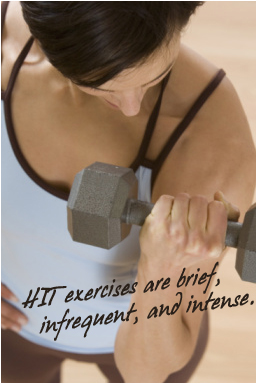
The basic principles of HIT are that the exercises are brief, infrequent, and intense.  The participant works harder for briefer amounts of time and less frequently than the typical high volume approach that trainers often encourage. It stresses intensity over repetition and focuses on performing quality weightlifting repetitions to the point of momentary muscular failure. The training takes into account the number of repetitions, the amount of weight, and the amount of time the muscle is exposed to tension in order to maximize the amount of muscle fiber recruitment. Many bodybuilders used this training technique as it’s an excellent means to build muscle mass which is my son’s goal.

A HIT workout targets one body part at a time with one or two exercises, a single set of 6 to 10 reps for your upper body and either 8 to 15 reps or more commonly 12 to 20 reps for your lower, performed until the exerciser is spent. Dead lifts usually have a rep range of 5 to 8 reps, and calves are sometimes trained with 1 to 2 sets of failure. Be certain to choose a weight that allows you to complete your reps to exhaustion. When you are able to do 10 or more reps, increase the weight for your next workout.

A rule of HIT is, as the exerciser get stronger, the stress is greater and more rest more is needed between workouts. So HIT workouts should be scheduled from 4 days a week to only one workout every 10 days. A sample HITs workout on Mondays, Wednesdays and Fridays or Tuesdays and Thursdays would include: barbell squats, leg extensions, leg curls, calf raises, chin ups or lat pull downs, barbell rows, bench presses, dumbbell flies or pec decks, shoulder presses, dumbbell lateral raises, barbell curls, and tricep extensions.

Not every strength training or exercise program is for everyone. I do not do High Intensity Training as I do not want my muscles any larger than they are already. But for those who would like be more well-built, like my son, than I suggest giving HIT a try. It’s been proven to be very effective and accomplishing increased strength and muscle mass.

Be Fit. Be Strong. Be Well.
Adriana

Share this:

  • Email a link to a friend (Opens in new window) Email
  • Share on Facebook (Opens in new window) Facebook
  • Share on LinkedIn (Opens in new window) LinkedIn
  • Share on Pinterest (Opens in new window) Pinterest
  • Share on Reddit (Opens in new window) Reddit
  • Share on X (Opens in new window) X
  • Share on Tumblr (Opens in new window) Tumblr
  • Print (Opens in new window) Print
Like Loading...

Sneaker Tips for Runners

15 Friday Jul 2011

Posted by Adriana Falco in Running

≈ Leave a comment

Tags

Athletic shoe, Running, Running Shoes, Sneakers (footwear)

When you’re a runner, your number one most important piece of gear is your sneakers. Once broken in, they become the beloved shoes that embrace the road, weather cool rain, and take whatever you dish out during your runs. They go with you to the gym, get packed in your bag during travels, and sit by your door waiting for you to grab them to go run.

Yes, to a runner, our sneaks are precious. The longer we keep them around, the harder it is to part with them, even when the padding inside becomes worn, the soles thin out and holes begin to appear on the shoe itself.

That’s why I felt a little saddened when I had to part with my last pair as recommended by my physical therapist. I had run way too many miles on the duo and she felt there are sneakers with better support out there for runners. She scribed down a couple brands and models, and off at went to the running story.

Wearing the right footwear is very important when exercising or playing a sport. Cleats for most field sports, boots for riding horses, barefoot for surfing and sneakers for running. When you wear the right shoe, you will be able to work out and play longer, lessen your chance of an injury and decrease how sore you might feel after finishing. The proper shoes give you the support you back needs, wriggle room for your toes, and ventilation for your feet to breathe. Below are some additional tips when buying sneakers to run in.

1.       Before entering the running store, know your arch support and pronation, the motion of how your foot rolls during your stride. This is critical for correct shock absorption and forward propulsion.

2.     Bring your old sneakers with you! The salesperson will know a lot from how you wore your last pair. Also, let them know what type of running you do, including terrain and mileage.

3.       Bring the socks you wear while running. This will help give you a more accurate feel of how the shoe fits.

4.       When trying on each pair, walk around the store in them to evaluate each pair according to their comfort, support, and fit.

5.       If down to two different pairs, place one shoe on each foot for a comparison and take a brief jog around the store. This was my deciding factor when choosing my new pair.

6.       Considering adding an insole, such as Superfeet, to your footwear. This will decrease the amount of shock that is absorbed by your body.

7.       If you run back-to-back days or more than four days a week, you should have at least two sets of sneakers and rotate them. This gives them longevity and avoids irritation and excessive wearing in any particular area.

8.       Keep track how many miles you run in your sneakers, and toss them after 400 miles due to the wear and tear. If you don’t want to keep count of your miles, then get a new pair every 4-5 months.

Keep in mind that everyone is unique, and there is no single perfect shoe. Use your running shoes just for running. Socks also make a difference. Cotton socks can cause blisters since they don’t breathe well or effectively remove moisture. Thermo-regulating performance socks that absorb the moisture are best for running.

Be Fit. Be Strong. Be Well.
Adriana

Share this:

  • Email a link to a friend (Opens in new window) Email
  • Share on Facebook (Opens in new window) Facebook
  • Share on LinkedIn (Opens in new window) LinkedIn
  • Share on Pinterest (Opens in new window) Pinterest
  • Share on Reddit (Opens in new window) Reddit
  • Share on X (Opens in new window) X
  • Share on Tumblr (Opens in new window) Tumblr
  • Print (Opens in new window) Print
Like Loading...

The Goodness of Wheat Germ

03 Sunday Jul 2011

Posted by Adriana Falco in Health and Wellness, Nutrition, Recipes

≈ Leave a comment

Tags

wheat germ

Many are not familiar with wheat germ or its healthy benefits. Once I was asked if wheat germ was some type of virus catchable by eating infected wheat products. This is farthest from the truth! It is not a bacterium by any means. It is actually an excellent source of many essential nutrients for your body bundled together. According to a Mayo Clinic ranking, it is also considered to be one of the top 10 healthiest foods.

I was first introduced to wheat germ as a child. Mom used it as one of her ingredients in her morning power drinks that she created in the blender. She would also add wheat germ to pancake batter, sprinkled it in our cereal, hid it in baked cookies and breads, and put it in break crumb mixture to coat chicken for dinner. Anywhere she could include it, she would.

So what is it? Well, wheat germ is not a food per se. It is actually the nutrient-rich embryo of the wheat kernel, removed during the processing of whole wheat grains to white flour, making up only about 2-3% of the entire wheat kernel. It is a very concentrated source of nutrients, containing numerous vital vitamins and minerals and healthy fats. Packed with power, two tablespoons a day of wheat germ provide an excellent source of protein, fiber, unsaturated fat, vitamin E, vitamin B1 B2, B6 phosphorus, zinc, thiamine, magnesium and pantothenic acid. Wheat germ also contains gluten. So if you are allergic to gluten, avoid it.

Wheat germ has many other health benefits. It can lower cholesterol, fight cancer and heart disease, prevent constipation and strokes, and improve digestion. It also helps to improve the storage of energy in muscles, boosts endurance and the overall stamina of the body, enhances body reflexes and improves overall alertness. Wheat germ additionally contributes in strengthening the immune system, balancing metabolism, and increasing the ability to cope with stress. It fights diabetes, prevents weight gain, protects the muscles, blood, lungs, and eyes, and, as an added bonus, slows down the aging process. What else can you possible ask for?

What is also great about wheat germ is that you can add easily it to a lot of the foods and drinks you already eat, such as yogurt, salads, casserole dishes, baked goodies and more. You can cook with it, bake with it, mix with it and sprinkle it in a favorite recipe.  Below are some of my own favorite wheat germ recipes.

Wheat Germ Whole-Wheat Buttermilk Pancakes: In a medium bowl, mix 2 eggs with 1/4 cup canola oil and 2 cups buttermilk. Stir in 2 teaspoons baking soda, 1/2 cup wheat germ, 1/2 teaspoon salt and 1 1/2 cups whole wheat pastry flour; mix until blended. Heat a lightly oiled griddle or frying pan over medium-high heat. Pour or scoop the batter onto the griddle, using approximately 1/4 cup for each pancake. Brown on both sides, turning once. Yields 12 pancakes.

Wheat Germ Cinnamon Pumpkin Waffles: Preheat a waffle iron according to manufacturer’s instructions. Combine 1 cup whole wheat flour, 1/4 cup wheat germ, 1/3 cup white sugar, 1 teaspoon ground cinnamon, 1 teaspoon pumpkin pie spice, 1/2 teaspoon ground nutmeg, 1/2 teaspoon salt, and 1 tablespoon baking powder in a bowl. Set aside. Beat together 3/4 cup milk, 1 /2 cup pumpkin puree, 2 tablespoons melted butter, 2 tablespoons olive oil, 1/2 cup unsweetened applesauce, 1 egg, and 1 egg white. Stir flour mixture into the pumpkin mixture along with 1/2 cup chopped pecans. Ladle the batter onto the preheated waffle iron. Cook the waffles until golden and crisp, 5 to 7 minutes. Yields 8 waffles.

Wheat Germ Cookies: Preheat the oven to 325 degrees F (165 degrees C). In a large bowl, cream together 1 cup butter (softened), 1 cup white sugar and 1 cup brown sugar until smooth. Beat in 2 eggs, one at a time then stir in 1 1/2 teaspoons vanilla extract. In a separate bowl, combine 1 1/2 cups rolled oats (not instant oats), 1 cup wheat germ, 1 cup all-purpose flour, 1 teaspoon baking powder, 1 teaspoon baking soda and 1 teaspoon salt. Stir the dry ingredients into the creamed mixture. Finally, mix in 1 cup flaked coconut, 2 cups chopped pecan s and 1 cup chopped pitted dates. Drop by rounded spoonfuls onto ungreased cookie sheets. Bake for 8 to 10 minutes in the preheated oven. Allow cookies to cool on baking sheet for a couple minutes before removing to a wire rack to cool completely. This allows them to flatten and firm up. Yields 5 dozen cookies.

Wheat Germ Double Chocolate Muffins:  Preheat an oven to 400 degrees F (200 degrees C). Grease 12 muffin cups, or line with paper muffin liners. Combine 1 cup whole wheat flour, 3/4 cup ground flax seed, 1/2 cup wheat germ, 1 teaspoon baking soda, 1 1/2 teaspoons baking powder, 1/2 cup cocoa powder, 1 tablespoon ground cinnamon, and 1/2 cup miniature semisweet chocolate chips in a large bowl. In another bowl, beat 1 cup low-fat buttermilk, 3/4 cup pumpkin puree, 1 cup brown sugar, 1 egg, and 1 teaspoon vanilla extract until smooth. Gently stir the wet ingredients into the dry, mixing just until combined. Spoon equal amounts of batter into muffin cups. Bake until a toothpick inserted in the center of a muffin comes out clean, about 20 to 30 minutes. Yields 12 muffins.

Enjoy these recipes or add wheat germ to one of your own favorite. You can find wheat germ in any grocery story. It’s typically next to the cereals. I buy the Quaker® Kretschemer Honey Crunch Wheat Germ and store it in my fridge once I open it. If kept in a sealed jar and refrigerated, wheat germ can last nine months.

Be Fit. Be Strong. Be Well.
Adriana

Share this:

  • Email a link to a friend (Opens in new window) Email
  • Share on Facebook (Opens in new window) Facebook
  • Share on LinkedIn (Opens in new window) LinkedIn
  • Share on Pinterest (Opens in new window) Pinterest
  • Share on Reddit (Opens in new window) Reddit
  • Share on X (Opens in new window) X
  • Share on Tumblr (Opens in new window) Tumblr
  • Print (Opens in new window) Print
Like Loading...

Adriana Falco

  • About the Blogger
  • Healthcare Disclaimer

Like Us on Facebook

Like Us on Facebook

Enter your email address to subscribe to this blog and receive notifications of new posts by email.

Join 135 other subscribers

Recent Posts

  • Easy and Healthy Peanut Butter Dessert Recipes June 9, 2024
  • The Good, the Bad, and the Ugly Oils You Should Include and Not Include in Your Diet March 4, 2024
  • The Sweet Truth About Sweet Potatoes February 28, 2024
  • Unlocking the Decade Beyond 40: 10 Ways to Maximize Longevity and Well-being January 8, 2024
  • Navigating Holiday Eating December 12, 2023
  • The Statin Conundrum: Why Alcohol and Cholesterol Meds Don’t Mix November 27, 2023
  • Healthy and Scrumptious Desserts for the Upcoming Holiday Season November 20, 2023
  • The Tiny Powerhouse: Unveiling the Health Wonders of Chia Seeds November 13, 2023
  • Unraveling the Enigma: Understanding Frontotemporal Dementia (FTD) November 10, 2023
  • Yoga vs. Mat Pilates: Choosing the Right Path to Mind-Body Wellness November 3, 2023

Search Blog Topics

Categories

  • Abdominal Muscles
  • Anti-Aging
  • Book Review
  • Caffeine
  • Cardio
  • Cycling
  • Diet
  • Exercising
  • Fitness Classes
  • Golf
  • Health and Wellness
  • Healthy Getaway
  • Hearth Health
  • Hiking
  • Metabolism
  • Muscles
  • New Year's Resolutions
  • Nutrients
  • Nutrition
  • Pain Management
  • pain relief
  • Paleo
  • Personal Trainer
  • Pickleball
  • Pilates
  • Recipes
  • Running
  • Setting Goals
  • Skiing
  • Skincare
  • Sleep
  • Sports
  • Superfoods
  • Swimming
  • Top 10 Lists
  • Training
  • Uncategorized
  • Vitamins
  • Weight Training
  • Yoga

Fit Past 40 Archives

Follow @ FitnFun

Tweets by fitnfun

Recent Tags

Abdominal exercise Aerobic exercise American Heart Association Bananas Blueberry Breakfast Caffeine Cardio Caveman Diet Cellulite Chocolate Connective tissue Cookies Dark Chocolate Dehydration diet Dieting DVD Eating Clean Energy Bars Energy Drinks Exercises exercising fast twitch muscle fiber Fat Fat Flush Plan Fitness fitness over 40 fitness past 40 Gym Health Healthy Choices Healthy Desserts healthy living Heart Health Hiking holiday eating Metabolism mindless eating Muscle New Year’s resolutions Nutrition pain relief Paleo Pancakes Peanut butter Personal trainer Personal Training Physical exercise Physical fitness Pickleball Pilate Pilates Pumpkin Recipes Riding Horses Running Running Outdoors Setting Goals Ski Skiing Spaghetti Squash sport Sports Strength training Sweet Potatoes Tennis Travel Weight loss Weight training Wellness Winter Blues Yoga Zucchini Zumba

Archives

Adriana Falco

  • About the Blogger
  • Healthcare Disclaimer

Like Us on Facebook

Like Us on Facebook

Enter your email address to subscribe to this blog and receive notifications of new posts by email.

Join 135 other subscribers

Recent Posts

  • Easy and Healthy Peanut Butter Dessert Recipes June 9, 2024
  • The Good, the Bad, and the Ugly Oils You Should Include and Not Include in Your Diet March 4, 2024
  • The Sweet Truth About Sweet Potatoes February 28, 2024
  • Unlocking the Decade Beyond 40: 10 Ways to Maximize Longevity and Well-being January 8, 2024
  • Navigating Holiday Eating December 12, 2023
  • The Statin Conundrum: Why Alcohol and Cholesterol Meds Don’t Mix November 27, 2023
  • Healthy and Scrumptious Desserts for the Upcoming Holiday Season November 20, 2023
  • The Tiny Powerhouse: Unveiling the Health Wonders of Chia Seeds November 13, 2023
  • Unraveling the Enigma: Understanding Frontotemporal Dementia (FTD) November 10, 2023
  • Yoga vs. Mat Pilates: Choosing the Right Path to Mind-Body Wellness November 3, 2023

Search Blog Topics

Categories

  • Abdominal Muscles
  • Anti-Aging
  • Book Review
  • Caffeine
  • Cardio
  • Cycling
  • Diet
  • Exercising
  • Fitness Classes
  • Golf
  • Health and Wellness
  • Healthy Getaway
  • Hearth Health
  • Hiking
  • Metabolism
  • Muscles
  • New Year's Resolutions
  • Nutrients
  • Nutrition
  • Pain Management
  • pain relief
  • Paleo
  • Personal Trainer
  • Pickleball
  • Pilates
  • Recipes
  • Running
  • Setting Goals
  • Skiing
  • Skincare
  • Sleep
  • Sports
  • Superfoods
  • Swimming
  • Top 10 Lists
  • Training
  • Uncategorized
  • Vitamins
  • Weight Training
  • Yoga

Fit Past 40 Archives

Follow @ FitnFun

Tweets by fitnfun

Recent Tags

Abdominal exercise Aerobic exercise American Heart Association Bananas Blueberry Breakfast Caffeine Cardio Caveman Diet Cellulite Chocolate Connective tissue Cookies Dark Chocolate Dehydration diet Dieting DVD Eating Clean Energy Bars Energy Drinks Exercises exercising fast twitch muscle fiber Fat Fat Flush Plan Fitness fitness over 40 fitness past 40 Gym Health Healthy Choices Healthy Desserts healthy living Heart Health Hiking holiday eating Metabolism mindless eating Muscle New Year’s resolutions Nutrition pain relief Paleo Pancakes Peanut butter Personal trainer Personal Training Physical exercise Physical fitness Pickleball Pilate Pilates Pumpkin Recipes Riding Horses Running Running Outdoors Setting Goals Ski Skiing Spaghetti Squash sport Sports Strength training Sweet Potatoes Tennis Travel Weight loss Weight training Wellness Winter Blues Yoga Zucchini Zumba

Archives

Create a free website or blog at WordPress.com.

Privacy & Cookies: This site uses cookies. By continuing to use this website, you agree to their use.
To find out more, including how to control cookies, see here: Cookie Policy
  • Subscribe Subscribed
    • Fit Past 40 Blog
    • Join 86 other subscribers
    • Already have a WordPress.com account? Log in now.
    • Fit Past 40 Blog
    • Subscribe Subscribed
    • Sign up
    • Log in
    • Report this content
    • View site in Reader
    • Manage subscriptions
    • Collapse this bar
 

Loading Comments...
 

    %d