• About the Blogger
  • Healthcare Disclaimer

Fit Past 40 Blog

~ Tips to stay fit, healthy, and young-looking

Fit Past 40 Blog

Author Archives: Adriana Falco

Slow Versus Fast Twitch Muscle Fibers

13 Friday May 2011

Posted by Adriana Falco in Muscles, Setting Goals, Training, Weight Training

≈ 1 Comment

Tags

Fibers, Muscle, Physical exercise, Weight training

When my 19-year-old son came home from college, he shared with me his attempts to build muscle on his lean body build. Most of us would want the days back again when our metabolism was churning ever so high and we could literally eat whatever was put before us and remain thin. But for my son, he was hoping he would be more muscular through his workouts and diet/nutrition intake. He was surprised through all his efforts, he hadn’t built up and out.

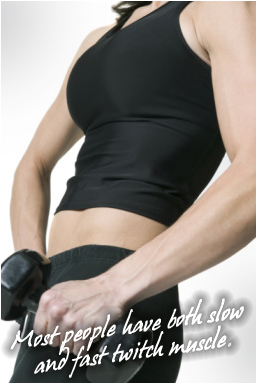
I then began to share with him the differences between fast and slow twitch muscle fiber and how they respond differently to training and physical pursuits. While I have the norm 50-50 combo of the two fibers, my son has mostly slow. I told him recognizing the differences, realizing your own muscle makeup and knowing the ideal training for your type will lead to the best results when trying to build up or slim down. He had never heard of the different muscle fiber types and suggested I write about it to inform others.

I stumbled onto the different types of muscle fiber in my own pursuit to try to understand why my lower half would build up from what seemed to be just looking at a weight while, on the opposite end, I could lift free weights until the cows came home and my upper body would never ever get bulky. With my own trial and error, I found out what exercises are best for muscle definition in my legs and butt, and what works ideal for my core, arms and shoulders. I must admit it gets challenging at times with my lower body; I can’t participate in step classes, cycling activities, and lower weight training on a regular basis without bulking up in what seems to be in a heartbeat to me.

Muscle fiber composition is already built into your genetics. The fibers are divided down into two main types and you can think of them as exact opposites. Type I, slow twitch, is for long endurance activities while Type II, fast twitch, is for short fast bursts.

Type I Fibers – Slow Twitch
The slow twitch muscle fibers are more efficient at using oxygen to generate more fuel for continuous, extended muscle contractions over a long period of time. They fire up more slowly than fast twitch fibers and can go for a long time before they fatigue. This fiber type is great for paced exercises and endurance activities, such as marathons and triathlons. When weight training, perform sets of high-rep lifts. Aim for 12 to 20 lifts per set at a comfortable weight, which builds strength without forcing your body to exert itself too strenuously.

Type II Fibers – Fast Twitch
The fast twitch muscle fibers do not need oxygen to create fuel and are excellent at generating quick, powerful bursts of speed and strength. These fibers fire up more quickly, but also fatigue easily. They are not effective in longer-term training, but are very useful in brief, high-intensity training, such as gymnastics, bodybuilding or powerlifting. When weight training, perform sets of low-rep lifts. Use heavy weights to make yourself stronger and to build up your fast twitch fibers.

Fast twitch can be further subdivided into Type IIa and Type IIb. Type IIa are known as intermediate fast-twitch fibers. They are a combination of Type I and Type II muscle fibers, using both aerobic and anaerobic metabolism almost equally to create energy. Type IIb are known as the classic fast twitch muscle fibers, using just anaerobic metabolism to create energy.

The distribution of muscle fiber differs in each individual. As mentioned earlier, examine your type and decide on your goals so that you can create an exercising program specific to your needs. Remember a person with more fast-twitch will do best with low reps and high sets and heavier weights. A person who with more slow-twitch will gain from high reps and low sets with sub-maximal weights. Read up and discuss a plan with a trainer at your gym as to what’s best for your own individual success.

Be Fit. Be Strong. Be Well.
Adriana

Share this:

  • Email a link to a friend (Opens in new window) Email
  • Share on Facebook (Opens in new window) Facebook
  • Share on LinkedIn (Opens in new window) LinkedIn
  • Share on Pinterest (Opens in new window) Pinterest
  • Share on Pocket (Opens in new window) Pocket
  • Share on Reddit (Opens in new window) Reddit
  • Share on X (Opens in new window) X
  • Share on Tumblr (Opens in new window) Tumblr
  • Print (Opens in new window) Print
Like Loading...

Following My Mother’s Footsteps into a Healthy Lifestyle

05 Thursday May 2011

Posted by Adriana Falco in Health and Wellness, Nutrition, Vitamins, Yoga

≈ 2 Comments

Tags

Andrew Weil, Health, Isadore Rosenfeld, Jack LaLanne, James Balch, Linus Pauling, Mara Carrico, Mehmet Oz, Nutrition, Prescription for Natural Cures, Robert Kowalski, Stephen Sinatra, Steven Pratt, Vitamins, Yoga

In honor of this upcoming Mother’s Day, I thought I’d write about the great influence my mother has had on my own healthy way of living today. I have mentioned my mother a few times in my writings before and, I must admit, I have yet to meet another woman as passionate or absorbed into healthy eating and exercising as Mom.

Just this morning, Mom called me up to discuss Bob Greene’s latest book, “20 Years Younger: Look Younger, Feel Younger, Be Younger.” He was on ABC’s Good Morning America earlier and she caught the clip. She suggested I should buy his book and that she’s going to get it, too. Mom is 86 years young.

You have to love Mom’s spunk and relentless dedication to health and wellness. As long as I can remember, this was her way of living. When I asked how her interest in living healthy first began, Mom says she happened to catch a television program, sometime between the births of my two older brothers, that instantly ignited her interest and fascination into wellness. And she took to the subject like a sponge.

Mom was always a ferocious reader and she began reading all of the latest and greatest health and nutrition books of her time. She scoured newspapers and magazines for columns and articles, and surfed radio and television channels for shows broadcasting the latest and greatest on diet, exercising and overall wellness.

For years, she drove from the suburbs of Philadelphia into the City of Brotherly Love to take yoga lessons from a then well-known instructor. His name now slips her, but that’s okay; after all Mom is in her mid-eighties. When finding the time to travel to the city for her classes became challenging, Mom switched to practicing the physical discipline at home. Sometimes I would see her in her bedroom stretching and bending into all sorts of yoga positions and poses, then to the teachings of Mara Carrico.

In addition to her yoga, Mom rode the stationary bike we kept downstairs, walked at a nearby track with a neighbor of ours, and followed the exercise routines of Francois Henri “Jack” LaLanne, the renowned exercise and nutritional guru who is referred to as the “godfather of fitness” or the “first fitness superhero.” As a child, I remember seeing his classes on TV with LaLanne dressed in tight-fitting clothing, and my mom following his instructions to a tee.

Accompanying Mom’s commitment to exercising, she also faithfully followed the teachings of several public health advocates which lead to her attraction to vitamins and nutrition. Almost daily, you would hear her listening to Dr. Carlton Fredericks on the radio in our kitchen. Once considered “America’s Foremost Nutritionist,” Dr. Frederick discussed vitamin and nutrition therapy for nearly half a century on the radio, broadcasting six days a week and nationally syndicated. Dr. Linus Pauling was another favorite of hers. An author of best-seller “How to Live Longer and Feel Better,” Dr. Pauling was an advocate on the very high intake of vitamins, especially vitamin C. Mom read this book and others of his. Then there is urologist James Balch, M.D. who co-authored “Prescription for Nutritional Healing: A to Z Guide to Supplements,” a book that has sold over 3.5 million copies to date. Dr. Bach also authored “Prescription for Dietary Wellness,” “Prescription for natural Cures” and “The Super Antioxidants.”

Mom also has read the writings of Dr. Stephen Sinatra, a board certified cardiologist, nutritionist, and anti-aging specialist specializing in integrative medicine; Dr. Isadore “Izzy” Rosenfeld, perhaps the most famous cardiologist in the world, plus a distinguished Professor of Medicine at New York Hospital/Cornell Medical Center and a well-known health authority in medical media; and Robert Kowalski, a renowned medical journalist and another best-selling author who was known for his a pioneering advocacy for quitting smoking, reducing saturated fat and cholesterol, increasing  exercise and adding oat bran and fish oil to a heart-healthy diet.

As a result of Mom’s healthy lifestyle, our refrigerator was stocked with all sorts of vitamins, supplements, minerals and herbs while growing up. No sweets could be found in our house, vitamins were served with breakfast, and all food labels were examined by Mom before entering our kitchen. When I was a child, she enrolled me in every sporting activity under the sun and encouraged me to continue my athletic endeavors well into my adulthood.

Although I didn’t see it then, Mom’s ways had a way of rubbing off on me. The older and wiser I become, the more I am like my mom with a similar strong allegiance to nutrition, fitness and overall wellness. Like her, I have added yoga to my workout regimen and, for the last several years, read books by Dr. Andrew Weil, Dr. Steven Pratt, Dr. Rosenfeld and Dr. Mehmet Oz among others. And to top matters off, vitamins come with breakfast, food labels are read before entering the kitchen, and, with the exception of dark chocolate, no sweets are in the house.

Thanks to my mom for a wonderful upbringing and an amazing life. As one of the early trailblazers who saw the value of good nutrition, regular exercises and overall wellness, Mom is my role model and my mentor. Her healthy ways are now my healthy ways. And on this Mother’s Day, when Mom unwraps Greene’s “20 Years Younger” book in large print, she will once again bask in the euphoria of learning something new and noteworthy about living a healthier life at any age.

Be Fit. Be Strong. Be Well.
Adriana
Share this:

  • Email a link to a friend (Opens in new window) Email
  • Share on Facebook (Opens in new window) Facebook
  • Share on LinkedIn (Opens in new window) LinkedIn
  • Share on Pinterest (Opens in new window) Pinterest
  • Share on Pocket (Opens in new window) Pocket
  • Share on Reddit (Opens in new window) Reddit
  • Share on X (Opens in new window) X
  • Share on Tumblr (Opens in new window) Tumblr
  • Print (Opens in new window) Print
Like Loading...

Health Perks of Playing Golf

28 Thursday Apr 2011

Posted by Adriana Falco in Cardio, Exercising, Golf, Metabolism, Sports

≈ 1 Comment

Tags

Cardio, Golf, Physical exercise, sport

This week I started golf lessons. I’m not a beginner. I’ve actually started playing the game 15 years ago while living in picturesque Connecticut. Back then, I bought my first set of clubs, took lessons from a pro and off I went. I immediately fell in love with the sport and was hooked. Soon I was playing up to four times a week on four different courses. I played rain or shine, joined a ladies league and carried my clubs with me everywhere I went in the trunk of my car, just in case I decided to hit the range or play an unexpected round.

Just like every now and then I hire physical trainers to change up my gym routines or to focus on certain areas, I also like to work with a golf pro to improve my swing and my game. No longer living in Connecticut, I don’t come close to the amount of time I use to put into the game. With numerous days between rounds, I feel I’m a bit off my game and losing my swinging touch. So now I’m back to a pro to hopefully correct any bad habits I may have developed and to sharpen my game all around.

Golf is a very popular sport worldwide and can be played at all ages. First invented on the coast of Scotland in the 15th century, there are over 50 million golfers in the world, more than 11,000 golf courses in just North America and nearly 32,000 courses found all over the world. Over 22% of the players are female, including Kathy Whitworth who has won 88 professional tournaments during her amazing career—more than any other male or female golfer in history.

While golf may seem more leisure and strategic than an exerted workout, there are some undeniable health benefits to playing a round. It is a form of physical exercise and it does use muscles in the entire body. And it can provide benefits ranging from improved circulation to improved flexibility and better balance.

Golf movements consist of walking, swinging, squatting, twisting, bending and lifting. Golfers can experience increased strength, mobility, hand-eye coordination and range of motion. The sport is also good for weight control if you choose to skip the cart and pass on the cold beverages. And a long four-hour-day on the course can lead way to a great night’s sleep. The following are additional benefits.

Cardio. You can get a good cardiovascular workout when walking an entire golf course. While buzzing around in one those carts is great fun, it also takes away a great opportunity from working up a good sweat. Walking is a good low-impact cardiovascular activity that gets the heart pumping. Research shows walking several miles around a varied terrain course has the same health benefits of a full 45-minute fitness class.

Strength. Carrying your bag of clubs of approximately 30 pounds is a simply way to add resistance training and muscle strengthening while walking the 18 holes. It will help to strengthen your core, arms, legs and shoulders and improve your overall muscle mass. Swinging your clubs will also help to tone up those very same muscles.

Metabolism. Walking a course will help to burn fat, improve your good cholesterol levels and speed up your metabolism. It’s been noted that a round of golf burns about 300 calories per hour in a 150 pound individual while carrying clubs, 230 calories when riding the cart and 200 calories when just hitting balls at a driving range.

Vitamin D. Playing out in the sun for a few hours has the benefit of soaking up the valuable Vitamin D from the sun without a second thought. Vitamin D is essential for having strong bones, regulating the amount of calcium and phosphorus in the blood, and helping to control the growth of skin cells.

Additionally, golf is a great stress reliever and helps to strengthen your eye-hand coordination. Risk of an injury is low, but like any other sport you should still warm up and stretch before playing, especially your back, shoulders and arms. Lift and carry clubs safely and remember to wear sun protection. Stay hydrated; drink water before, during and after your game. And the best part? Just having fun with a group of friends!

Be Fit. Be Strong. Be Well.
Adriana

Share this:

  • Email a link to a friend (Opens in new window) Email
  • Share on Facebook (Opens in new window) Facebook
  • Share on LinkedIn (Opens in new window) LinkedIn
  • Share on Pinterest (Opens in new window) Pinterest
  • Share on Pocket (Opens in new window) Pocket
  • Share on Reddit (Opens in new window) Reddit
  • Share on X (Opens in new window) X
  • Share on Tumblr (Opens in new window) Tumblr
  • Print (Opens in new window) Print
Like Loading...

Blueberries for Breakfast for a Superfood Start

18 Monday Apr 2011

Posted by Adriana Falco in Diet, Health and Wellness, Metabolism, Recipes

≈ 1 Comment

Tags

Blueberry, Metabolism, Super Food, Superfood

It’s always been recommended to eat breakfast within 30-60 minutes after waking up in the morning. This kick starts your metabolism for the day which is key when maintaining or attempting to lose weight. It is also advised that in order to achieve the full health benefits of the superfood blueberries, to consume 1 to 2 cups of this fruit daily.

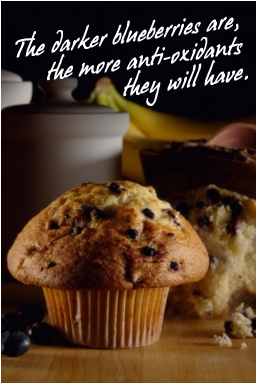
Blueberries have been added to the distinguished superfood group due to their high amounts of antioxidants, anthocyanins, vitamin C, manganese and dietary fiber. They are accredited to lowering the risk of heart disease and lowering the chances of getting cancer. And on top of all this goodness for your wellness, they happen to be great tasting, too!

So what better time than the morning to super start your day by including blueberries in your breakfast. Now that spring has arrived, it’s easy to find fresh blueberries by the pound package in your supermarket’s produce aisle. Toss them in your oatmeal or favorite pancake batter, or simply eat them alone or paired with another fruit. Any way you add them in your healthy meal, it has to be great for you. Below I have included some of my favorite blueberry recipes.

Heart-Healthy Blueberry Smoothie: Place the following ingredients in a blender – 1 scoop vanilla whey protein, 1/2 c. fresh orange juice, 1 c. fresh or frozen blueberries and 1 scoop of ice. Blend until smooth. 1 serving.

Blueberry Orange Parfaits: Combine 1 1/2 tbsp. Demerara or turbinado sugar, 1/2 tsp. grated orange rind and 2 (7 oz.) containers reduced-fat plain Greek-style yogurt in a small bowl. Stir until blended. Spoon 1/4 c. blueberries into 4 tall glasses. Spoon about 2 1/2 tbsp. of the yogurt mixture over blueberries in each glass. Add 1/4 c. orange to each serving. Repeat layers with remaining blueberries, yogurt mixture, and orange. Sprinkle 1 tbsp. wheat germ over each serving; serve immediately. 4 servings.

Fast Track Blueberry Muffins: Preheat oven to 350 degrees. Mix 1 1/2 c. whole wheat flour, 3/4 c. flax seed meal, 1 c. brown sugar, 1 tsp. baking powder, 2 tsp. baking soda, 1/4 tsp. salt, 2 tsp. cinnamon, 2 tsp. pumpkin pie spice, 1/4 tsp. ground cloves, 1 tsp. ground ginger and 2 apples (shredded) together. Set aside. Combine 3/4 c. nonfat milk, 1 large egg, 2 egg whites and 1 tsp. vanilla extract and beat for 30 seconds. Pour liquid ingredients into the dry. Stir and fold in 1/2 c. blueberries. Spray muffin tin with Pam or use paper liners. Fill each muffin tin cup 3/4 full. Back for 15 to 20 minutes. 15 servings.

Whole Wheat Blueberry Scones: Preheat the oven to 375 degrees. Line a baking sheet with parchment or wax paper. Combine the 3 tbsp. butter (cut into small pieces), 1-1/2 c. all purpose unbleached flour, 2/3 c. whole wheat flour, 1/4 c. granulated evaporated cane sugar, 2-1/4 tsp. baking powder, 1/4 tsp. baking soda and 1/4 tsp. sea salt in a large bowl. With a pastry blender, cut into the butter until the mixture is crumbly. Add 1/4 c. blueberries and 2 tsp. grated orange rind. Stir with a fork. Add 1 large egg (lightly beaten) and 1/2 c. fat-free buttermilk. Stir with a fork until the dry ingredients are just moistened. Gather the mixture into a ball, place on the baking sheet, and pat into a 7-inch circle. Cut into 10 one-inch wedges with a knife dipped in flour. Do not separate the wedges. Bake until golden brown and when a toothpick inserted into the center comes out clean – about 20 minutes. Transfer to a rack. Sift 1 tsp. confectioners’ sugar over the top. Cut with a serrated knife while still warm and serve. 7 servings.

Blueberry Buckle: Preheat oven to 350 degrees. Combine 2/3 c. uncooked steel-cut oats, 1/2 c. blueberries, 1 tbsp. slivered almonds, 1/2 tsp. cinnamon, 1/2 c. water and 1 tsp. honey (optional) in a glass baking dish. Mix well. Bake for 20 minutes in an oven or microwave on high for 1-1/2 minutes. 1 serving.

Try one of these recipes above or add blueberries to your own favorite morning recipe for a super start of your super day.

Be Fit. Be Strong. Be Well.
Adriana

Share this:

  • Email a link to a friend (Opens in new window) Email
  • Share on Facebook (Opens in new window) Facebook
  • Share on LinkedIn (Opens in new window) LinkedIn
  • Share on Pinterest (Opens in new window) Pinterest
  • Share on Pocket (Opens in new window) Pocket
  • Share on Reddit (Opens in new window) Reddit
  • Share on X (Opens in new window) X
  • Share on Tumblr (Opens in new window) Tumblr
  • Print (Opens in new window) Print
Like Loading...

Eating Clean: A Lifestyle Choice

11 Monday Apr 2011

Posted by Adriana Falco in Anti-Aging, Diet, Setting Goals

≈ Leave a comment

Tags

Clean Eating, Eating Clean

I don’t know about you, but I know when I eat an oversize carb, such as a bowl of pasta or even a couple of pumpkin muffins, my stomach feels full in an uncomfortable way, when only hours before leading up to that meal, my stomach felt perfectly fine. In contrast, when eating a healthy green salad or veggies and fish, I leave the table feeling satisfied but not overstuffed.

That brings me to my decision to go the route of “clean eating” completely. I have dabbled in this lifestyle of eating, but never ventured fully into it since I do love my fried egg sandwiches from Manhattan Bagel and sweet dessert endings when dining out. While I do eat 85-90% healthy, I don’t eat healthy enough. And after eating a serving of tortellini with pesto, and feeling my stomach feel heavy once again, I really started to question my eating decisions.

As a woman in her 40s, I still eat like I’m in my 20s, thanks to my high metabolism; but at the same time, I know my high metabolism isn’t as high as I was when I was 20; it was even higher. I really should be tweaking my daily intake before it does finally catch up with me. Then I reminded myself of the golden rule – diet is everything – as 80% of what you look like is due to what you are consuming.

And with that, like a switch, I joined the ranks of clean eaters, like Jennifer Aniston and Angelina Jolie and many other health-conscious eaters, and began indulging in this very healthy way of eating. Many eat clean to lose weight, maintain weight or achieve a fitness goal. I am doing so for a healthier lifestyle and maintain my younger-than-my-years’ physique. Yes, no more processed foods. No more sweet treats; well, once in awhile perhaps. I am very discipline by nature, so the instant switch should be no sweat. The foods in eating clean will not only make one look their best and feel great, but energy levels will increase, calories will be burned more efficient, and that much disliked heavy stomach feeling will be eliminated.

When eating clean, the daily meals area a combination of lean means, complex carbohydrates and healthy fats which keeps blood sugar levels stable and wards off hunger. It takes discipline, but you have to remind yourself of all the long-term health benefits for your body. The foods in this eating lifestyle are natural, free of added sugars, hydrogenated fats, trans-fats and anything else that is unnatural, unnecessary and unhealthy. Meals are more frequent, three main ones and two to three small snacks a day, to rev up your metabolism and curb your appetite.

When grocery shopping, one thing to keep in mind is that you want to look for as many one-ingredient foods as possible, staying clear of foods made with white flour, sugar and sugar substitutes, saturated fats and trans-fats. Read the labels of foods having more than one ingredient. Select whole grains and complex carbohydrates which will give you more energy and keep you feeling fuller longer. Pick up lots of fresh fruits and vegetables. These are full of natural sugar and can satisfy your sweet tooth. Choose lean meats, chicken and fish for your protein power. And remember to grab raw and unsalted nuts, such as almonds, cashews, walnuts and peanuts, which make great flavorful snacks. You will find a lot of great recipes online that support clean eating, as well as books and periodicals in stores.

The following is a sample of my eating clean for a day.

Breakfast: Hot oatmeal with fresh blueberries and sprinkle of cinnamon paired with a whole fruit (usually a banana).

Mid-Morning Snack: A melody of fresh berries or a handful of almonds.


Lunch: Mixed green salad with a six-ounce grilled chicken.


Mid-Day Snack: A serving of crunchy miniature carrots.

Dinner: Pan-seared halibut, steamed asparagus, brown rice.


Beverage: Plenty of water, at least two liters a day. An added twist of lemon is sometimes nice.

Dining out is just as easy as cooking in when eating clean, and I do tend to eat out frequently. Just the other night I have a great spinach salad for dinner, complete with hard-boiled eggs, pine nuts, chopped tomatoes and grilled shrimp – at an Italian restaurant. It was delicious! Plus my stomach felt light and satisfied! My four other dining companions divulged in large pasta platters with servings of bread. None of them completed their meals and, with doggie bags in tow, all felt full and heavy. One even said to me, “I should have had what you ate.”

In no time at all, making healthy eating decisions will become second natural. And with summer right around the corner, it’s a great time to start before slipping back into that slim bikini. Before you will know it, you will realize how wonderful you feel and great you look since changing your eating lifestyle. I highly recommend trying clean eating, even just for a period of time. You can then judge for yourself. Pretty soon I might see you blogging about eating clean as well. See you at the beach!

Be Fit. Be Strong. Be Well.
Adriana

Share this:

  • Email a link to a friend (Opens in new window) Email
  • Share on Facebook (Opens in new window) Facebook
  • Share on LinkedIn (Opens in new window) LinkedIn
  • Share on Pinterest (Opens in new window) Pinterest
  • Share on Pocket (Opens in new window) Pocket
  • Share on Reddit (Opens in new window) Reddit
  • Share on X (Opens in new window) X
  • Share on Tumblr (Opens in new window) Tumblr
  • Print (Opens in new window) Print
Like Loading...

Top Fat-Fighting Foods That Keep You Satisfied

04 Monday Apr 2011

Posted by Adriana Falco in Diet, Health and Wellness, Setting Goals

≈ 2 Comments

Tags

Health

Friends frequently ask me for what foods will help them lose the weight or what foods should they stay away from. I immediately start rambling on what foods they should stock in their fridge and what foods they should toss in the garbage can.

Knowing what’s right to eat and what’s wrong has been lessons taught from me from my childhood. My mother was a then pioneer mom whose focus was on healthy eating. There were rarely any sweets in the house. No soda. No chips. No cookies. With the exception of pasta twice a week, we were served well-balanced meals and very healthy snacks. Our fridge was stocked with vitamins, minerals and other health supplements. My friends who visited thought my family was on a diet. No, this was all my mom’s doing. This is how we ate and drank.

My mother was an avid listener and strong follower of Dr. Carlton Fredericks, a one-time leader in nutritional therapy and a radio show host at of a nutrition show for over 30 years. While not an medical doctor, Dr. Fredericks earned a doctorate degree from New York University in public health education. His program on health care and nutrition first aired in 1957. He broadcast live six days a week, advising his listeners about modern food processing methods and how they impaired our natural nutrients. He discussed vitamins and mineral supplements, what types of foods to avoid, and what foods to feast upon. My mother would listen devotedly, scribing down notes and putting his words into her own actions.

Dr. Fredericks’ teachings influenced my mom’s ways of eating. My mom’s ways became the basis to my own attitude regarding food; hence, I continue to the cycle of eating well, sharing all that I was taught and all that I have learned since.

The following are some of the foods you should incorporate into your daily diet. Not only will they help in fighting fat and prevent hunger, but they will aid you in having a healthy and well body.

Beverages: (unsweetened) Blueberry juice, Cherry Juice, Coffee, Green Tea, Pomegranate Juice, Skim Milk, Vegetable Juice.

Beans: Black Beans, Kidney Beans, Lentils,Lima Beans,Soybeans, White Beans.


Breakfast Foods: Cottage Cheese, Egg Whites, Fat-Free Plain Yogurt, Greek Yogurt, Oatmeal.


Fish: Cod, Flounder, Halibut, Salmon, Sardines, Sole, Tilapia, Tuna.

Fruits: Apples, Blueberries, Cherries, Grapes, Grapefruit, Lemons, Oranges, Pears, Pomegranates, Raspberries, Strawberries, Watermelon.

Herbs, Spices and Oils: Basil, Black Pepper, Cardamom, Cayenne, Chives, Cilantro, Cinnamon, Cloves, Flaxseed Oil, Garlic, Ginger, Olive Oil, Parsley, Turmeric, Vinegar.


Lean Meats: Flank Steak, Eye of Round, London Broil, Skinless Chicken Breast, Sushi, Top Sirloin.


Nuts and Seeds: (raw and unsalted) Almonds, Flaxseeds, Sesame Seeds, Walnuts.

Snacks: Air-Popped Popcorn, Crispbreads, Raisins.


Spreads: Peanut Butter.


Vegetables: Arugula, Bell Peppers, Broccoli, Cabbage, Carrots, Celery, Chillies, Garlic, Hot Peppers, Jalapeños, Leeks, Olives, Onions, Romaine Lettuce, Scallions, Shiitake mushrooms, Spinach, Sweet Potatoes, Tomatoes.

Whole Grains: Quinoa, Tabouli.

So toss out the soda that’s in the fridge at home. Be disciplined and be dedicated. Stop buying the sugary sweets and foods with the empty and useless nutrition. Instead stock up on the above and start eating well right now. It’s your health, and as the old cliché goes, ‘you only live once.’

Be Fit. Be Strong. Be Well.
Adriana

Share this:

  • Email a link to a friend (Opens in new window) Email
  • Share on Facebook (Opens in new window) Facebook
  • Share on LinkedIn (Opens in new window) LinkedIn
  • Share on Pinterest (Opens in new window) Pinterest
  • Share on Pocket (Opens in new window) Pocket
  • Share on Reddit (Opens in new window) Reddit
  • Share on X (Opens in new window) X
  • Share on Tumblr (Opens in new window) Tumblr
  • Print (Opens in new window) Print
Like Loading...

Top 10 Ways to Prevent Unsightly Cellulite

28 Monday Mar 2011

Posted by Adriana Falco in Diet, Exercising, Skincare, Top 10 Lists

≈ 2 Comments

Tags

Cellulite, Connective tissue, Fat, Health

Orange peel thighs. Cottage cheese arms. Pin cushion butts. Sounds attractive, right? It’s all jesting jargon for the unflattering look of cellulite that can unfortunately appear on one’s body. It can be a person’s worst nightmares, especially for women. Unsightly, not-so-cute dimples that can emerge out of nowhere on one’s upper arms, legs, butt or even the stomach area. And with no magic wand or secret remedy to diminish (Diminish? I meant to say annihilate!), there is unfortunately a limited of tactics that can be taken to reduce and ideally eliminate.

Cellulite does not favor a race or recognize age once one enters puberty, but it does prefer women over men (90% of all women have some level of cellulite) and, like it or not, heredity plays a role. Another cause is inactivity; when our food intake becomes greater than energy output, then body fat levels rise, especially with age. Women who experienced pregnancy and lactation may also see more cellulite on their bodies since the body uses the fatty tissue as insulation, structural support and cushioning. Impaired blood flow and lymph circulation are other causes in developing cellulite as are female hormones (estrogen and progesterone).

If and when cellulite will appear on your body also depends on the strength and flexibility of your fat cells and the thickness of your underlying fat layer in your skin. Cellulite develops in the topmost layers of the skin, resting on top of a layer of firm collagen connective tissue. But cellulite can be avoided altogether. Below are preventative steps to take to help manage and prevent cellulite from making an appearance.

Ways to Prevent:

1.       Lose the extra unnecessary body fat through safe and permanent weight loss methods and exercise programs.

2.       Avoid all commercial baked goods, processed food, and fried foods which are loaded with unhealthy hydrogenated and partially hydrogenated oils.

3.       Reduce your foods and beverages that are high in sugar or are highly processed carbohydrates as they stimulate excess insulin in your blood causing your body to make and store extra fat.

4.       Incorporate the best anti-cellulite foods into your diet, such as beans, legumes, fresh fish, white meats, fruits and vegetables.

5.       Drink lots of water which will help flush toxins out your body and diminish cellulite.

6.       Supplement your diet with a good, balanced blend of the healthy essential fatty acids (Omega 3s, 6s, 9s), including seafood, fish, cantaloupes, papayas, walnuts, pine nuts, almonds, flaxseeds and pumpkin seeds.

7.       Get out there and exercise! Lack of exercise hardens the connective tissue in the skin.

8.       Stop smoking which fast forwards the development of cellulite by constricting your blood vessels and damaging the connective tissue and avoid alcohol which has toxins and calories that get stored in your body as fat, contributing to the cellulite problem.

9.       Avoid diet pills, sleeping pills and diuretics which all lead to cellulite. So do most birth control pills due to high levels of estrogen.

10.    Stop crash dieting which causes your body to think it’s starving and begins to consume saturated fats which builds cellulite.

Cellulite is the result of several factors, but while it is perceived as unsightly, it can be reduced and all together eliminated. The best way to manage cellulite is through exercise and watching your diet . Keep in mind that your daily diet is most crucial in the development and avoidance of cellulite as what you eat can cause toxic build-up and poor circulation. Just follow the methods above and you will be on your way to having smooth skin once again.

Be Fit. Be Strong. Be Well.
Adriana

Share this:

  • Email a link to a friend (Opens in new window) Email
  • Share on Facebook (Opens in new window) Facebook
  • Share on LinkedIn (Opens in new window) LinkedIn
  • Share on Pinterest (Opens in new window) Pinterest
  • Share on Pocket (Opens in new window) Pocket
  • Share on Reddit (Opens in new window) Reddit
  • Share on X (Opens in new window) X
  • Share on Tumblr (Opens in new window) Tumblr
  • Print (Opens in new window) Print
Like Loading...

Sleep: An Essential Ingredient to a Healthy Well-Being

21 Monday Mar 2011

Posted by Adriana Falco in Diet, Sleep

≈ Leave a comment

Tags

Health, Sleep debt, Sleep deprivation, Sleep disorder

Many of us take getting a good night’s sleep for granted, and instead put it last on our priority list when burning the candle at both ends. We realize we need the sleep and that it is important. But often it’s thought we’ll catch the extra snooze on Saturday and Sunday when many times this doesn’t occur since other responsibilities or activities pop up on the weekend.

Like regular workouts and a healthy diet, a good night’s sleep is just as important to our bodies and our minds to function effectively and efficiently. Sleep is another vital ingredient to a healthy well-being and it impacts nearly every area of our daily life. Not only does it refresh the body and the mind, but regular sleep habits will make you feel your best.

Most people don’t realize how much sleep they need and why it is so important to their well-being. Studies have shown that sleep plays an essential role in promoting physical health, longevity, and emotional well-being and that our bodies regulates our sleeping habits, the same as it regulates our eating, drinking, exercising and breathing. Other studies confirm that people who get the right amount of sleep on a regular basis tend to live longer and, overall, have healthier lives than those who sleep too few or even too many hours each night.

When our bodies do not get enough sleep, our bodies recognizes and remembers the sleep deficit and expects and needs us to return the missed zzz’s in the very near future. When the catch up on sleep doesn’t occur, problems can develop, such as forgetfulness, moodiness, poor concentration, slower reaction times, injuries, health issues such as heart disease and diabetes, weight gain and less mojo for exercising and activities. Even a shorter lifespan.

How much sleep each person actually needs differs from individual to individual. Some people need a great deal of sleep, while others require only a minimum. I happen to need at least eight hours of sleep every night which is the average. Finding your right amount of sleep hours and remaining consistent about are both key. Even better is going to bed and rising at the same times day in and day out.

Regular, good nights’ rest improves the quality and the length of your life. Other benefits include helping to keep your heart healthy, helping to reduce stress, improving your memory and mood, reducing your chances of diabetes, helps to repair your body and helps control body weight issues.

Eating the right foods in the hours before you hit the hay may help you fall asleep faster and deeper. Ten foods that will help you snooze are almonds, cherries, bananas, oatmeal, hard-cooked eggs edamame, miso soup, herbal teas, dairy and cereal. Ten foods that will make you toss and turn during the night include caffeine, aged cheeses, spicy foods, processed or smoked meats, tomato-based sauces, energy drinks, ginseng tea, milk chocolate and alcohol.

So find the best ritual for you before going to bed. May it be reading a book, a glass of warm milk or some snuggle time with your honey. Snooze away and awaken to another great day in your life.

Be Fit. Be Strong. Be Well.
Adriana
Share this:

  • Email a link to a friend (Opens in new window) Email
  • Share on Facebook (Opens in new window) Facebook
  • Share on LinkedIn (Opens in new window) LinkedIn
  • Share on Pinterest (Opens in new window) Pinterest
  • Share on Pocket (Opens in new window) Pocket
  • Share on Reddit (Opens in new window) Reddit
  • Share on X (Opens in new window) X
  • Share on Tumblr (Opens in new window) Tumblr
  • Print (Opens in new window) Print
Like Loading...

The Sinful Sips of Soda

14 Monday Mar 2011

Posted by Adriana Falco in Diet

≈ Leave a comment

Tags

Diet soda, Phosphoric acid, Sodium benzoate, Soft drink, Sugar substitute

Perhaps there is nothing like a chilly sizzling soda sliding up through a straw, or sipped straight out of a cold can, fizzing and buzzing as it sinfully and deliciously glides down your throat. Is it the bubbles that have you hooked? The caffeine sensation? Or is it simply the taste?

For me, it was the taste. Yes, there was a time I, Ms. Fitness Conscientious, drank soda. Diet Mountain Dew. I simply loved the lemon lime taste and the fuzzily feel. But one day I had a terribly reaction when I went without it for just one day. That was my wakeup call and I haven’t had a sip of the stuff since.

Americans are drinking more pop sodas today than ever before. Sodas may taste great and keep us extra alert, but no matter what brand you may guzzle down, they all lack nutritional value and are an unhealthy beverage choice.

Most sodas are composed of carbonated water, dye coloring, sugar or an artificial sweetener, caffeine, phosphoric acid and contain high-fructose corn syrup. The perfect recipe for tooth decay, nutritional depletion, obesity, type 2 diabetes and heart disease. You are also more of risk to osteoporosis as the carbonation and phosphoric acid can decrease your blood calcium levels. Soda can stain your teeth yellow and can contribute to cellulite. The caffeine in soda can decrease the calcium in your body, as well as stimulate your central nervous system causing stress, a racing mind, insomnia and the jitters. And not only is caffeine a stimulant that can be habit forming, it is diuretic which can cause you dehydration.

Diet sodas are not a healthier choice and they are not going to help you lose those last 10 pounds. On the contrary. The artificial sweeteners stevia, aspartame, sucralose, neotame, acesulfame potassium, and saccharin that are added to sodas actually all hinder dieting and all can be health threatening. Studies have shown artificial sweeteners linking to depression, panic attacks, headaches, allergies, infertility, cancer, Alzheimer’s disease and other medical conditions. Drinking either diet or regular soda on a daily basis will also cause a 30% increased chance of you gaining weight around the middle than if you opted for just plain water or other healthier choices. And a recent Purdue University study released in the journal Behavioral Neuroscience hints at the idea that artificial sweeteners, like those found in soda, might alter a person’s metabolism.

Sodas also contain preservatives. The main preservative in most brands is sodium benzoate, although many brands are taking steps to remove this additive. Sodium benzoate is used to preserve freshness and can also be found in other acidic foods such as salad dressings, jams and fruit juices. But at the same time, this preservative can also be found in alcohol-based mouthwashes, cough syrups, shampoos, silver polishes and even some fireworks. Yummy, huh? And although the FDA has previously classified sodium benzoate as safe, the classification is now being questioned. Studies have revealed that when in the presence of vitamin C, sodium benzoate forms a chemical known as benzene, which not only causes damage to DNA, it’s a known carcinogen and plays a death defying role in a variety of diseases. Further studies have also found a link of sodium benzoate to hyperactivity when paired up with artificial coloring, having a particular effect on some children. All away around, sodium benzoate is nothing but bad unhealthy news.

But there are some useful good uses of the sizzle stuff. Some auto mechanics actually use soda as an industrial agent, to put out engine fires or to place on corroded car batteries as a dissolvent for alkali. Police officers sometimes use soda to remove blood from the highways stemming from accidents. And cleaning professionals often use soda to remove hard stains found in bathrooms.

With the high sugar content, the elevated acidity, the addictive psychoactive stimulant and the dangerous artificial sweeteners all found in soda, it is truly the drink of self bodily destruction. Avoiding the popular beverage can be the best thing you can do for your teeth, your bones, your waistline and your overall health.

Be Fit. Be Strong. Be Well.
Adriana

Share this:

  • Email a link to a friend (Opens in new window) Email
  • Share on Facebook (Opens in new window) Facebook
  • Share on LinkedIn (Opens in new window) LinkedIn
  • Share on Pinterest (Opens in new window) Pinterest
  • Share on Pocket (Opens in new window) Pocket
  • Share on Reddit (Opens in new window) Reddit
  • Share on X (Opens in new window) X
  • Share on Tumblr (Opens in new window) Tumblr
  • Print (Opens in new window) Print
Like Loading...

The Surprising Health Benefits of Downhill Skiing

07 Monday Mar 2011

Posted by Adriana Falco in Cardio, Exercising, Skiing, Sports

≈ 1 Comment

Tags

Ski, sport, Winter sport

This month I will be traveling to Sunday River, one of Maine’s largest and most visited ski resorts. It has 132 trails across eight interconnected mountain peaks and 16 lifts. Its highest vertical drop is 2,340 feet; peanuts when compare to the drops out West, but here in the East, it’s pretty decent.

I’ve been skiing since the fifth grade. I got into the sport by chance. My then best friend at the time, Beth Johnson, was just learning to ski. For months during the winter, her dad took us to a nearby ski area. I fell in love with it immediately and have been downhill skiing ever since.

Some might be surprised to think of skiing as a great sport that benefits your body. One could think of it as dangerous, hard on the knees or too exposed to frostbite. While skiing is a strenuous form of exercise, the healthy advantages to downhill skiing are numerous.

One of the biggest benefits of skiing for fitness is that it is great, complete body workout, exerting every major muscle group from your head to your toes and toning your entire torso. This terrific aerobic activity improves balance and coordination and is an excellent way to stretch and strengthen leg muscles, particularly in the thighs and around the knees, as well as help with joint mobility. Your quadriceps, hamstrings, calves and gluteal muscles will all be worked, due to the semi-squat position skiers take, as well as your abductor and adductor muscles from all of the lateral motions.

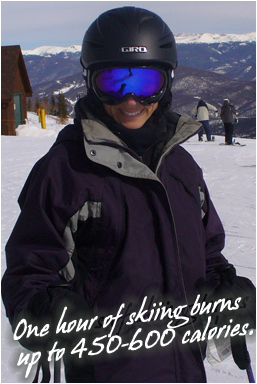
Downhill skiing is also an excellent cardio workout, strengthening your heart, improving your circulatory system and releasing oxygen to your muscles. It is an excellent fat burning activity, burning 450 to 600 calories for an average 165-pound person while mogul skiing can burn almost 900 calories an hour. Skiing also boosts your metabolism and helps to regulate good cholesterol levels in your body.

Skiing requires a certain level of balance, strength and endurance so pre-conditioning in the weeks and months leading up to the slopes to increase your endurance and lessen a chance of a possible injury is a must. Pilates will work your core before taking on the mountains while yoga is a good discipline to improve your strength, balance and concentration. The Awkward Pose is one of the better positions, which when done correctly, increases your overall strength, tones the muscles of your legs and aligns your skeletal system.

Ski injuries that due occur seem to either happen early in the day when muscles aren’t loose yet or late in the afternoon when the muscles are fatigue. So just like you stretch before a long run, stretch your muscles before heading out to the lift lines. This includes your shoulders and back, but most particularly your legs which will receive the brunt of your workout. To help prevent altitude sickness, stay well hydrated continually and avoid caffeine and alcohol. And always remember to wear your helmet!

What is the best benefit of skiing? That it does not seem like you are working out for six or more straight hours. Instead, you feel like you are eighteen again as you fly down the snowy slopes set against magnificent scenic surroundings. You are able to experience the great outdoors in the cold crisp air, explore endless miles of trails and enjoy the endorphins that kick in right before you hit the hot tub!

Be Fit. Be Strong. Be Well.
Adriana

Share this:

  • Email a link to a friend (Opens in new window) Email
  • Share on Facebook (Opens in new window) Facebook
  • Share on LinkedIn (Opens in new window) LinkedIn
  • Share on Pinterest (Opens in new window) Pinterest
  • Share on Pocket (Opens in new window) Pocket
  • Share on Reddit (Opens in new window) Reddit
  • Share on X (Opens in new window) X
  • Share on Tumblr (Opens in new window) Tumblr
  • Print (Opens in new window) Print
Like Loading...
← Older posts
Newer posts →

Adriana Falco

  • About the Blogger
  • Healthcare Disclaimer

Like Us on Facebook

Like Us on Facebook

Enter your email address to subscribe to this blog and receive notifications of new posts by email.

Join 135 other subscribers

Recent Posts

  • Easy and Healthy Peanut Butter Dessert Recipes June 9, 2024
  • The Good, the Bad, and the Ugly Oils You Should Include and Not Include in Your Diet March 4, 2024
  • The Sweet Truth About Sweet Potatoes February 28, 2024
  • Unlocking the Decade Beyond 40: 10 Ways to Maximize Longevity and Well-being January 8, 2024
  • Navigating Holiday Eating December 12, 2023
  • The Statin Conundrum: Why Alcohol and Cholesterol Meds Don’t Mix November 27, 2023
  • Healthy and Scrumptious Desserts for the Upcoming Holiday Season November 20, 2023
  • The Tiny Powerhouse: Unveiling the Health Wonders of Chia Seeds November 13, 2023
  • Unraveling the Enigma: Understanding Frontotemporal Dementia (FTD) November 10, 2023
  • Yoga vs. Mat Pilates: Choosing the Right Path to Mind-Body Wellness November 3, 2023

Search Blog Topics

Categories

  • Abdominal Muscles
  • Anti-Aging
  • Book Review
  • Caffeine
  • Cardio
  • Cycling
  • Diet
  • Exercising
  • Fitness Classes
  • Golf
  • Health and Wellness
  • Healthy Getaway
  • Hearth Health
  • Hiking
  • Metabolism
  • Muscles
  • New Year's Resolutions
  • Nutrients
  • Nutrition
  • Pain Management
  • pain relief
  • Paleo
  • Personal Trainer
  • Pickleball
  • Pilates
  • Recipes
  • Running
  • Setting Goals
  • Skiing
  • Skincare
  • Sleep
  • Sports
  • Superfoods
  • Swimming
  • Top 10 Lists
  • Training
  • Uncategorized
  • Vitamins
  • Weight Training
  • Yoga

Fit Past 40 Archives

Follow @ FitnFun

Tweets by fitnfun

Recent Tags

Abdominal exercise Aerobic exercise American Heart Association Bananas Blueberry Breakfast Caffeine Cardio Caveman Diet Cellulite Chocolate Connective tissue Cookies Dark Chocolate Dehydration diet Dieting DVD Eating Clean Energy Bars Energy Drinks Exercises exercising fast twitch muscle fiber Fat Fat Flush Plan Fitness fitness over 40 fitness past 40 Gym Health Healthy Choices Healthy Desserts healthy living Heart Health Hiking holiday eating Metabolism mindless eating Muscle New Year’s resolutions Nutrition pain relief Paleo Pancakes Peanut butter Personal trainer Personal Training Physical exercise Physical fitness Pickleball Pilate Pilates Pumpkin Recipes Riding Horses Running Running Outdoors Setting Goals Ski Skiing Spaghetti Squash sport Sports Strength training Sweet Potatoes Tennis Travel Weight loss Weight training Wellness Winter Blues Yoga Zucchini Zumba

Archives

Adriana Falco

  • About the Blogger
  • Healthcare Disclaimer

Like Us on Facebook

Like Us on Facebook

Enter your email address to subscribe to this blog and receive notifications of new posts by email.

Join 135 other subscribers

Recent Posts

  • Easy and Healthy Peanut Butter Dessert Recipes June 9, 2024
  • The Good, the Bad, and the Ugly Oils You Should Include and Not Include in Your Diet March 4, 2024
  • The Sweet Truth About Sweet Potatoes February 28, 2024
  • Unlocking the Decade Beyond 40: 10 Ways to Maximize Longevity and Well-being January 8, 2024
  • Navigating Holiday Eating December 12, 2023
  • The Statin Conundrum: Why Alcohol and Cholesterol Meds Don’t Mix November 27, 2023
  • Healthy and Scrumptious Desserts for the Upcoming Holiday Season November 20, 2023
  • The Tiny Powerhouse: Unveiling the Health Wonders of Chia Seeds November 13, 2023
  • Unraveling the Enigma: Understanding Frontotemporal Dementia (FTD) November 10, 2023
  • Yoga vs. Mat Pilates: Choosing the Right Path to Mind-Body Wellness November 3, 2023

Search Blog Topics

Categories

  • Abdominal Muscles
  • Anti-Aging
  • Book Review
  • Caffeine
  • Cardio
  • Cycling
  • Diet
  • Exercising
  • Fitness Classes
  • Golf
  • Health and Wellness
  • Healthy Getaway
  • Hearth Health
  • Hiking
  • Metabolism
  • Muscles
  • New Year's Resolutions
  • Nutrients
  • Nutrition
  • Pain Management
  • pain relief
  • Paleo
  • Personal Trainer
  • Pickleball
  • Pilates
  • Recipes
  • Running
  • Setting Goals
  • Skiing
  • Skincare
  • Sleep
  • Sports
  • Superfoods
  • Swimming
  • Top 10 Lists
  • Training
  • Uncategorized
  • Vitamins
  • Weight Training
  • Yoga

Fit Past 40 Archives

Follow @ FitnFun

Tweets by fitnfun

Recent Tags

Abdominal exercise Aerobic exercise American Heart Association Bananas Blueberry Breakfast Caffeine Cardio Caveman Diet Cellulite Chocolate Connective tissue Cookies Dark Chocolate Dehydration diet Dieting DVD Eating Clean Energy Bars Energy Drinks Exercises exercising fast twitch muscle fiber Fat Fat Flush Plan Fitness fitness over 40 fitness past 40 Gym Health Healthy Choices Healthy Desserts healthy living Heart Health Hiking holiday eating Metabolism mindless eating Muscle New Year’s resolutions Nutrition pain relief Paleo Pancakes Peanut butter Personal trainer Personal Training Physical exercise Physical fitness Pickleball Pilate Pilates Pumpkin Recipes Riding Horses Running Running Outdoors Setting Goals Ski Skiing Spaghetti Squash sport Sports Strength training Sweet Potatoes Tennis Travel Weight loss Weight training Wellness Winter Blues Yoga Zucchini Zumba

Archives

Blog at WordPress.com.

Privacy & Cookies: This site uses cookies. By continuing to use this website, you agree to their use.
To find out more, including how to control cookies, see here: Cookie Policy
  • Subscribe Subscribed
    • Fit Past 40 Blog
    • Join 86 other subscribers
    • Already have a WordPress.com account? Log in now.
    • Fit Past 40 Blog
    • Subscribe Subscribed
    • Sign up
    • Log in
    • Report this content
    • View site in Reader
    • Manage subscriptions
    • Collapse this bar
 

Loading Comments...
 

    %d