• About the Blogger
  • Healthcare Disclaimer

Fit Past 40 Blog

~ Tips to stay fit, healthy, and young-looking

Fit Past 40 Blog

Category Archives: Nutrition

Eating a Paleo Diet

17 Monday Mar 2014

Posted by Adriana Falco in Diet, Health and Wellness, Nutrition, Paleo

≈ Leave a comment

Tags

Caveman Diet, Hunter Gatherer Diet, Paelo Diet, Paleo, Paleolithic Diet, Stone Age Diet

week102A few years back, I was having digestive issues. When I couldn’t seem to figure out the cause myself, I went to see a gastroenterologist who happened to be just about nine months pregnant. After discussing my digestive problems, examining my health and reviewing my diet, she just plain out told me to stop eating processed food.

“No processed food?” I had instantly thought to myself. “No more pumpkin pancakes, chocolate cake or oatmeal raisin cookies?”

I could understand possibly see why she would suggest such a thing, but how? At the time, I ate 85% “healthy,” but to go 100%? Ouch! I loved having a treat now and then as a reformed sweet and bread eater. It seemed like the impossible and unlikely.

Instead, I began eating a gluten-free diet. After doing further research myself, to me that seemed like a better answer and route. I created a list of all the foods I could eat along with all those I needed to avoid and carried the list around with me to restaurants and grocery stores. I was determined to beat my digestive issue and finding foods that were a gluten-free seemed like a challenging fun game to me.

To quicken my story here, eating gluten-free did not solve my issues; in certain respects, it made it worse. By then, my gastroenterologist was well into her maternity leave, so I continued fiddle around with my diet on my own. In the end, I discovered on my own what worked best for me was a diet of lean poultry, fresh water fish, seafood, garden vegetables, fresh fruit, omega-3 eggs, nuts, seeds, and fresh water. That’s it. By the time I reached this point with my eating, I was complete off processed foods and dairy and on my own terms – except for an occasional frozen yogurt as a special treat. And this time, it was easily achievable – and all of my digestive issues were gone.

Fast forward my diet quest further, and it wasn’t until I saw a chef on TV making banana ice cream, and I Googling the recipe afterward, that I connected the dots and realized that my eating habits were actually Paleo. A diet rich in the foods that can be fished and hunted as listed above plus grass-fed red meat and healthful oils – olive, flaxseed and nut – and all free of any food additives. An avid Paleolithic practitioner may also break down their diet and consume 56–65% of their foods from animals and 36–45% from plants. Foods not Paleo are dairy, grains and grain-like seeds, legumes, refined vegetable oils, salt, starchy vegetables, refined sugar, and processed food. Bingo! I my diet had a name and a following!

The Paleo diet (also known as the Paleolithic, Caveman, Stone Age, or Hunter-Gatherer Diet) may be one of the most talked about nutritional plans of today, but it actually first became popular back in the 1970’s when gastroenterologist Walter Voegtlin, MD self-published “The Stone Age Diet: Based on In-depth Studies of Human Ecology and the Diet of Man.” In his writings, he claimed humans are carnivorous animals and should feast on a diet a Paleolithic diet of our ancestors – mainly fats, protein, and small amounts of carbs. Dr. Voegtlin came to this conclusion after treating various digestive problems, including colitis, Crohn’s disease, irritable bowel syndrome and indigestion. In the subsequent years, Stanley Boyd Eaton, MD; Melvin Konner, MD, PhD; anthropologist Marjorie Shostak; Staffan Lindeberg, MD, PhD and others followed and supported Dr. Voegtlin’s findings with their own published articles and books.

Today, physicians around the globe often recommend the Paleo diet to their patients suffering from serious illnesses or diseases and digestive issues, like myself. Studies also show that eating a Paleo diet benefits “healthy” individuals by helping to reduce their risk of heart disease, type 2 diabetes, and most chronic degenerative diseases. It is known to slow down or reverse progression of autoimmune diseases, improve or eliminate acne; better mental outlook and clarity, aide in losing weight if one is overweight, and increase energy levels, athletic performances and libido.

For me, I’ve never felt better since following a Paleo diet; eating a “truly healthy” and process-free diet without any man-made foods and additives. So my question to you is why wait until you are sickly or possibly facing a life threatening illness to change what you are digesting in your body? Eating man-made foods, which misleadingly looks more appealing and may taste more appetizing, is simply not what your body needs or was originally intended to digest and breakdown. Just a thought to ponder. You have one body and one life. Treat it like the lifelong investment is truly is and watch what you digest. Can’t do like I had once thought? Sure you can! What it really comes down to simply mind over matter, wellness over weakness.

Be Fit. Be Strong. Be Well.
Adriana
Share this:

  • Click to email a link to a friend (Opens in new window) Email
  • Click to share on Facebook (Opens in new window) Facebook
  • Click to share on LinkedIn (Opens in new window) LinkedIn
  • Click to share on Pinterest (Opens in new window) Pinterest
  • Click to share on Pocket (Opens in new window) Pocket
  • Click to share on Reddit (Opens in new window) Reddit
  • Click to share on X (Opens in new window) X
  • Click to share on Tumblr (Opens in new window) Tumblr
  • Click to print (Opens in new window) Print
Like Loading...

Healthy Banana Desserts

03 Monday Mar 2014

Posted by Adriana Falco in Diet, Health and Wellness, Nutrition, Paleo, Recipes

≈ Leave a comment

Tags

Bananas, Healthy Desserts

week98Who doesn’t love bananas? Who doesn’t love desserts? Combine them together and it’s a win-win sweet ending to any meal or a delicious treat when snacking in-between.

Perhaps you remember my mentioning how bananas are my Mother’s favorite fruit. In “The Bulging Benefits of Bananas,” I shared how Mom would always buy a bunch or two from the grocer, encourage us to snack on these white soft fruits every day, and how she would add several into delicious homemade meals and, better yet, desserts.

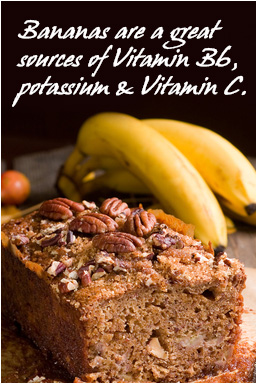
I also cited how bananas are loaded with nutrients, vitamins, and minerals, including potassium, fiber, B vitamins, tryptophan, and the good sugars – glucose, fructose and sucrose. And how eating this fruit daily has ample health benefits, such as fighting depression, curing hangovers, relieving morning sickness, and helping to protect against kidney cancer, diabetes, osteoporosis and blindness, and more. Plus benefits one who never think of – reducing the itch and swell of a mosquito bite by placing the inside of the banana peel against it and the same for removing warts.

But let’s get back to the desserts. Bananas make an excellent ingredient to add to cakes, cookies, pies, puddings, and more. They are especially delish when paired up with peanut butter, oats, apples, or dark chocolate.

Since healthy desserts are often hard to find, I thought I’d share a few of my favorite banana desserts. Try one or try them all!

Banana, Apple and Almond Butter Smoothie
In a blender, add 2 frozen bananas (peeled and cut in chunks), 1 medium apple (cored and quartered), 1/4 cup almond butter, 1/2 cup almond milk (or soy milk, non-fat milk, or coconut water), and 1 pinch nutmeg (optional). Blend until smooth. Add ice for additional thickness.

Banana, Apple and Walnut Bread
Preheat oven to 350°F. Lightly spray a 9-inch loaf pan. In a medium-sized bowl, mash 2 ripe bananas with a fork. Add 1 peeled and diced apple, 1/2 cup Sucanat or Stevia, 1 3/4 cups whole-wheat flour, 1/2 cup applesauce, 1 teaspoon baking soda, 1 teaspoon salt, and 1 teaspoon cinnamon to the bowl, and mix well. Pour into greased pan, and sprinkle with chopped 1 tablespoon chopped walnuts. Bake for 40 to 50 minutes or until a toothpick inserted in the middle comes out dry. Cool in pan for 15 minutes, and then transfer to a cooling rack.

Banana Carrot Cake with Blackberries
Preheat oven to 350°F. Mash 2 large and ripe
 bananas with a fork, add 3 eggs and 2 tablespoons coconut oil and whisk together. Add 3/4 cup almond milk, 1/2 cup brown rice flour, 1 cup rolled oats, 1 tablespoon chia seeds (optional), 1 teaspoon vanilla, a pinch of salt, and a pinch of saffron. Stir. Shred two carrots and ground 1 cup walnuts. Add to the mixture and stir. Grease the inside of 2 large 8-inch tartlet tins with coconut oil. Pour the batter into the tins and bake for about 30 minutes. Serve the cake while warm and top each with fresh blackberries and roasted almonds.

Banana Cream Pie
Peel 4-6 ripe bananas and cut in half. Place in a Ziploc bag or container and freeze overnight. For the crust, add 2 cups of unroasted, unsalted almonds into a food processor and process until ground. With processor still running, add a touch of maple syrup in a slow thin drizzle. Press crust mixture into a medium size pie plate with your finger, spatula, or wooden spoon. Next, fill crust with a generous amount of banana ice cream using a spatula or wooden spoon to evenly distribute and smooth out. Top pie with fresh fruit – blueberries, strawberries, raspberries, or blackberries.

Banana Foster
Peel 3 large firm ripe bananas and cut into medallions. Heat one tablespoon of coconut oil over medium heat in a large, heavy skillet and add bananas. Cook for 2-3 minutes, just until tender and turns brown. Serve warm over banana ice cream or Greek yogurt.

Banana Ice Cream
Peel 2 medium bananas and cut into medallions. Freeze until it hardens, about an hour or two. Remove and blend in a food processor or blender until smooth and creamy. Add 3 tablespoons almond butter and teaspoons honey and blend OR add 3 tablespoons unsweetened cocoa powder, 2 tablespoons coconut milk and 1/2 teaspoon vanilla. Both combos are delish or toss in fresh berries. You can also just eat just plain. Transfer to freezable container and freeze for a few more hours. Then serve and indulge!

Banana Muffins
Preheat oven to 325°F. Mash 2 very ripe bananas with a fork until mostly smooth. Stir in 2 eggs, coconut 1/4 cup melted coconut oil, 2 tablespoons honey, 1 teaspoon vanilla, 1 teaspoon cinnamon, 1 teaspoon and apple cider vinegar. Additional optional add-ins include: 1/4 cup shredded coconut, 1/4 cup chopped nuts or seeds, 1/4 cup shredded carrot or shredded zucchini, 1/4 cup dried cranberries or raisins, or 1/4 cup dark chocolate chips. Mix together 1 cup almond flour, sifted 1/4 cup coconut flour, 1/2 teaspoon salt, and 1 1/2 teaspoon baking soda. Add to mixture until well blended. Let batter rest for 5 to 10 minutes to allow the coconut flour to absorb the liquids. Fill paper-lined or well-greased muffin tins 2/3 full and bake 15 to 20 minutes. Test for doneness with a toothpick. Cool for 10 minutes then remove muffins to a wire rack. Makes 12 regular-size muffins.

Banana Oatmeal Cookies
Preheat the oven to 350°F. Mash 3 ripe bananas and mix with the 3 cups oats (preferably not instant), 1/2 cup skim milk and 1 egg. Add in 2 tablespoons Stevia (or other sugar substitute), 1/2 teaspoon vanilla extract, 1 teaspoon of cinnamon, and 1 tablespoon peanut butter (optional). Other optional add-ins area 1/2 cup dark chocolate chips or raisins. Grease a cookie tray with cooking spray and spoon the mixture on to make around 9 large cookies. Bake for 20-25 minutes until golden brown. Store in an airtight container.

Banana Peanut Butter Pudding
Puree 15 ounces chickpeas (or 15 ounces garbanzo beans), 1 banana, 2 tablespoons peanut butter, 1 tablespoon honey, 1 teaspoon honey in a blender, food processor, or hand blender. Spoon into serving bowls and refrigerate before serving.

Frozen Chocolate-Covered Bananas
Line a baking sheet with parchment or wax paper. Peel and cut 4 large ripe bananas into thirds crosswise. Insert a Popsicle stick into each piece of banana. Cover each piece with melted dark chocolate using a rubber spatula and sprinkle with shredded coconut or crushed nuts. Place the bananas on the baking sheet and freeze until frozen, about 2 hours. Indulge or store airtight in the freezer for up to one week.

Be Fit. Be Strong. Be Well.
Adriana

Share this:

  • Click to email a link to a friend (Opens in new window) Email
  • Click to share on Facebook (Opens in new window) Facebook
  • Click to share on LinkedIn (Opens in new window) LinkedIn
  • Click to share on Pinterest (Opens in new window) Pinterest
  • Click to share on Pocket (Opens in new window) Pocket
  • Click to share on Reddit (Opens in new window) Reddit
  • Click to share on X (Opens in new window) X
  • Click to share on Tumblr (Opens in new window) Tumblr
  • Click to print (Opens in new window) Print
Like Loading...

The Right Foods for a Healthy Heart

27 Thursday Feb 2014

Posted by Adriana Falco in Health and Wellness, Nutrition

≈ Leave a comment

Tags

Heart Disease Prevention, Heart Health, Heart Healthy Foods

week95You workout, you eat well, but do you also include foods that are especially good for your heart? Did you know that heart disease is the number one cause of American deaths in and stroke is number four?

My own father had high blood pressure and passed away at age 79 after his second stroke. We thought he would outlive us all by his disciplined way of life through exercise and staying on top of his weight plus his exuberant zest for life. But he never told of us of his first stroke – probably not to worry us – for if he had I would have watched his diet choices closely and checked in on his daily exercise and activities.

Mom had low blood pressure practically her entire life until she hit her mid-70s when high blood pressure just genetically kicked in. Mom also began to slow down in her later years (she’s now 89) and exercises less. But shortly after Dad passed, Mom began having a series of strokes but survived them all most likely due to heart-healthy diet.

So while coronary heart disease and cardiovascular disease may be in the genes handed to you, you can control your daily diet, which can help prevent, avoid, and stop a serious outcome. Keeping your heart healthy and strong and giving it the added nutritional boost it needs and deserves is in your hands by choosing to eat the right foods for excellent vascular health. Luckily, there are many. Below is just for starters.

Apples
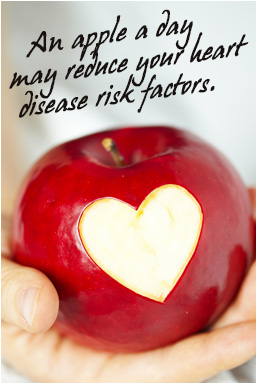
Apples are rich in pectin, a form of soluble fiber known to help lower cholesterol levels and contain a wonderful antioxidant flavonoid mixture of quercetin, epicatechin, epigallocatechin, kaempferol and other compounds to stop the “bad” LDL cholesterol from oxidizing and prevent plaque built up in arteries.

Avocado
One of the world’s healthiest foods, avocados are crammed with monounsaturated fat and two key carotenoid antioxidants—lycopene and beta-carotene. The fruit, which is often mistaken for a vegetable, will help reduce your LDL levels while raising the amount of “good” HDL cholesterol in your body. The greatest source of carotenoids in the avocado is in the dark green flesh that lies just beneath the skin so be certain not to slice into that dark green portion any more than necessary when peeling.

Bananas
Bananas are loaded with potassium and potassium helps to maintain your normal heart function and the balance of sodium and water in your body. Potassium also helps your kidneys excrete excess sodium, which in turn balances your blood pressure. Just one banana has 422 milligrams, about 12 percent of your recommended daily amount.

Beans
“Beans, beans; they are good for the heart, the more you eat, the more …” Healthier you are! Packed with omega-3 fatty acids, calcium, and soluble fiber, just a half-cup of cooked beans daily helps to lower your cholesterol and prevents absorption. Beans also have flavonoids, which help to reduce your risk of a heart attack and stroke by hindering the adhesion of platelets in the blood. Choose chickpeas or black, kidney, lima, navy, pinto beans, and legumes.

Berries
Full of anti-inflammatories, just a cup a day of berries — blueberries, strawberries, black berries, raspberries, cranberries, or bilberries — will help to reduce your risk of heart disease and cancer by increasing your levels of “good” HDL cholesterol while also lowering your blood pressure. Eat your favorites!

Dark Chocolate
Ahhh, the health benefits when indulging in dark chocolate! Eating moderate amounts of flavanol-rich dark chocolate — just one-ounce daily of 70 percent cocoa solids — has a blood-thinning effect, benefiting your cardiovascular health by reducing inflammation while also lowering your blood pressure due to its plentiful levels of nitric oxide.

Flaxseed
Top your morning oatmeal or sprinkle into your shakes as just a little goes a long way for your heart with flaxseed! Multiple published researches indicate flaxseed reduces the risk and fight everything from heart and lung disease to diabetes and certain cancers with its soluble and insoluble fibers, omega-3 and omega-6 fatty acids, and lignans.

Green Tea
Drink up! Studies show drinking 12 ounces a day reduces your heart attack chances by 50 percent thanks to the catechins (antioxidants) found in green tea by expanding your heart artery and keeping them clear hence improving your blood flow. It also reduces your cholesterol and triglycerides levels and lowers your risk of developing gum disease, which is often linked to heart problems.

Leafy Greens
The darker the better when it comes to leafy greens, which are highest in magnesium, lutein, folate, potassium, fiber, and Vitamin E. The combination helps to lower your blood pressure, triglycerides while increasing the good HDL cholesterol. Fresh spinach, kale, and Swiss chard are your best bets! Increase your daily servings for an added boost.

Nuts
A great source of mono- and polyunsaturated fats with low levels of saturated fats, nuts provide much needed fiber in the daily diet. Also filled with of vitamins and minerals. Go for the walnuts if picking just one. Pecans, almonds, hazelnuts, pistachios, pine nuts and peanuts are also excellent.

Oatmeal
Full of omega-3 fatty acids, folate, and potassium, this fiber-rich superfood contains beta glucan, a soluble fiber that lowers your total cholesterol and LDL cholesterol levels. The oats also helps to keep your digestive system healthy and keep your arteries clear. Add oats to smoothies for an extra lift.

Oily Fish
Salmon, mackerel, tuna, herring, and sardines are all super-rich in omega-3 fatty acids and contain astaxanthin, a very powerful antioxidant. All help to reduce blood pressure and clotting plus help prevent irregular heart rhythms. Eat two servings a week to reduce risk of a heart attack by up to 30 percent. Choose wild over farm-raised.

Olive Oil
Full of monounsaturated fats, olive oil reduces your bad LDL cholesterol and lowers your risk of developing heart disease. Only two tablespoons a day is all you need. Extra-virgin olive oil contains polyphenols that reduce inflammation and help prevent certain cancers. Remember to store your olive oil in a dark, cool spot in a tightly covered container.

Pomegranates
Don’t buy or eat pomegranates? You might want to start now. Their powerful punch of polyphenols — including anthocyanins and tannins — help to reduce the buildup of the plaque in your arteries and lower your blood pressure.

Popcorn
Who would have guessed? Unsalted and unbuttered popcorn, which also happens to be a whole grain, is packed with polyphenols — antioxidants linked to improving your heart and cardiovascular health — and boasting three times more polyphenols than beans and four times more than berries.

Soy
An excellent protein substitute for red meat, soy is a high-quality protein containing high levels of polyunsaturated fats, fiber, vitamins, and minerals. It is also low in saturated fat, helping to reduce your triglycerides, preventing cardiovascular disease and keep your heart strong and healthy. Eat natural sources of soy, such as edamame, tempeh, or organic silken tofu.

Whole Grains
Just 25 grams of whole grains a day is all you need to reduce your risk of heart disease. Whole grains contain bran, germ, and the starchy endosperm and provide and high soluble fiber to help to keep your heart healthy by lowering your “bad” LDL plus the antioxidants, phytoestrogens and phytosterols found in whole grains protect your against coronary disease.

Wine
Countless studies have findings showing people who drink moderately are less likely to have heart disease than those who don’t. Up to one glass for women and two for men can reduce your risk of coronary heart disease by raising the “good” HDL cholesterol while decreasing inflammation and “thinning the blood.”

Yogurt
Yogurt? Yes, yogurt! Older women who regularly eat four ounces of yogurt have less thickening of the carotid arteries’ walls, lowering the risk of a stroke and heart attack. Yogurt eaters also have healthier gums due to the probiotics.

Changing your diet is a great start.  A good rule of thumb for a healthy heart is to also control your portion size and eat more of low-calorie, nutrient-rich foods and less of high-calorie, high-sodium foods. This means more fruits and vegetables and eliminating refine, processed, and fast foods. Choose lean meats, skinless poultry and fresh water fish. Select low-fat dairy products and chow down on egg whites versus whole.

Be Fit. Be Strong. Be Well.
Adriana

Share this:

  • Click to email a link to a friend (Opens in new window) Email
  • Click to share on Facebook (Opens in new window) Facebook
  • Click to share on LinkedIn (Opens in new window) LinkedIn
  • Click to share on Pinterest (Opens in new window) Pinterest
  • Click to share on Pocket (Opens in new window) Pocket
  • Click to share on Reddit (Opens in new window) Reddit
  • Click to share on X (Opens in new window) X
  • Click to share on Tumblr (Opens in new window) Tumblr
  • Click to print (Opens in new window) Print
Like Loading...

How Fast is Too Fast for Weight Loss

17 Monday Feb 2014

Posted by Adriana Falco in Diet, Health and Wellness, Metabolism, Muscles, Nutrition

≈ Leave a comment

Tags

diet, Rapid Weight Loss, Weight loss

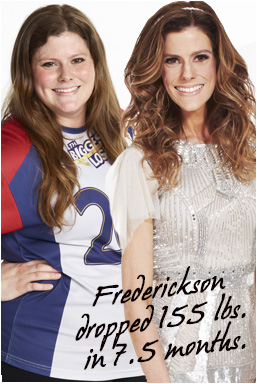
week94When The Biggest Loser contestant Rachel Frederickson won Season 15 of the television reality show, the public and the media went on a frenzy – her weight loss gone too far. During the taping of the show and the three months proceeding, the voice-over artist from Los Angeles dropped from 260 to an unrecognizable 105 pounds to claim the season’s crown and $250,000 cash prize. Her astonishing 155-pound weight lost, equivalent to 59.62% of her starting body weight, was achieved from daily six hours workouts and limiting her diet to 1,600 calories a day.

At 5’4” and 105 pounds, 24-year-old Rachel is now the exact same size of me. So of course, I will disagree with the self-claim body critics who will say she’s too thin and that she is anorexic. I like my size. And I think Rachel looks great! I believe it’s perhaps more about the shock of going from an unhealthy, obese body size to where she is today in the rapid speed of time to complete. In just under eight months. Wow! Now that is motivation and discipline. Or is it insanity and starvation?

To be fair, a swift weight loss can occur when a person of obese size stops eating poorly, frequently, and in overly amounts with little or no exercise in their day-to-day life and instead switches to eating wisely and healthy with the right foods in the right amounts and with an exercise program approved by their physician or personal trainer. The pounds can drop off. Easily 10 or more a week initially, depending on your starting size, and less as time passes. And of course, results are even quicker when you are on a national television show and have the constant support and guidance from a personal trainer and dietician.

So for those who aren’t cast on a weight lose show, what is a good rule of thumb to follow when it comes to losing weight? How much is too much and how much is too little? How much should you lose versus can lose?

There is no perfect answer to these questions since there are several baseline factors to consider. Starting weight. Goal weight. Metabolism. Genetics. Health conditions. Diet restrictions. Discipline. Exercise regimen. Support system. Lifestyle. Environment. And more.

However, if you want to lose weight and keep it off, your goal should be just one to two pounds a week. That’s all. It may not sound like a lot, but remain patient, dedicated, and consistent and you will see your hard work will pay off over time. Plus losing weight at a slow steady pace reduces the risk of unwanted side effects and increases the likelihood that you will be able to keep the weight off long term, like with The Biggest Loser Season 1 winner Ryan Benson, who started at 330, dropped to 208 and is now at 300 and Season 3 winner Erik Chopin, who began at 407, plummeted to 193 and is back up to 368.

Rapid weight loss is unhealthy and ineffective. It can cause dehydration, fatigue, dry skin and nails, hair loss, bloating, constipation, gallstones, iron and nutrient deficiencies, mineral loss, liver damage, heart disease, osteoporosis, and more. And if you are losing more than a couple of pounds a week, your body perceives it’s in starvation and will start burning muscle for needed fuel and energy. With less muscle mass, your metabolism automatically slows down and burns fewer calories.

As with any weight loss plan, consult with your primary physician first and request a complete physical before dieting. He or she can help you select a diet plan that is right for you and the correct amount of calories. Discuss an exercise program that is appropriate for your age, existing, fitness level, and goal. Finally, keep a dairy to help with your own personal weight loss journey. Track your daily food intakes and times along with the triggers that cause you to want to eat outside your meals and snacks. Document your exercise regimen, nightly hours of sleep, and your daily stress levels. Collectively, this will reveal your best recipe for your weight loss.

Be Fit. Be Strong. Be Well.
Adriana
Share this:

  • Click to email a link to a friend (Opens in new window) Email
  • Click to share on Facebook (Opens in new window) Facebook
  • Click to share on LinkedIn (Opens in new window) LinkedIn
  • Click to share on Pinterest (Opens in new window) Pinterest
  • Click to share on Pocket (Opens in new window) Pocket
  • Click to share on Reddit (Opens in new window) Reddit
  • Click to share on X (Opens in new window) X
  • Click to share on Tumblr (Opens in new window) Tumblr
  • Click to print (Opens in new window) Print
Like Loading...

Why Guzzling Down Energy Drinks Isn’t Healthy

03 Monday Feb 2014

Posted by Adriana Falco in Health and Wellness, Nutrition

≈ Leave a comment

Tags

Caffeine, Caffeine Use Disorder, Energy Drinks

week89This past week was a tough week for me. I got up, worked out, then had to drive 160 miles round trip in just one day. Then, I had to do that every single day for five straight days in a row.

By day four of the week, I was dragging. I simply felt lifeless with no vigor and little brainpower. All I really wanted to do was to go home climb back into my warm comforting bed and sleep my exhaustion off. But I couldn’t. I had to push and power through the day and get all done that was expected of me. But how, when my energy level was at zero? The answer, as wrong as it was then and remains, is that I broke down and drank a Red Bull. The following day, on day five, I drank another. Actually two.

I gave up soda years ago. As shared in my “The Sinful Sips of Soda,” I originally drank one diet brand simply for it’s lemon lime taste and the fuzzily feel. But I soon gave it up, cold turkey, after a bad reaction one night plus learning how unhealthy the carbonated drink is with all its non-nutritious and harmful ingredients, including the high amounts caffeine most carry.

Energy drinks are no different. In fact, they are worse. But that hasn’t stopped consumers. There are over two million people per day who drink energy drinks. The most popular? Red Bull, in fact the most popular energy drink in the world with 5.2 billion cans sold in 2012 alone.

The whole marketing hoopla around energy drinks is that give the drinker a burst of magically feeling energy. No, you are not superman or superwoman, but you know have the get-up-and-go you were lacking prior to gulping down the drink.

How does that happen? The beverage contains stimulant drugs, mainly very large amounts of caffeine, but also has high levels of sugar or artificial sweeteners plus herbal extracts, B Vitamins, and amino acids. Many also contain an added mix of carbonated water, yerba mate, açaí, and taurine and perhaps ginseng, maltodextrin, inositol, carnitine, creatine, glucuronolactone, and ginkgo biloba depending on the brand.

To illustrate the difference in caffeine levels between soda and energy drinks, a classic Coca-Cola Classic contains 23 milligrams (mg.) of caffeine per eight ounce serving while the sugary Monster, Red Bull, and Rockstar energy drinks have 75 mg., 77 mg., and 80 mg. respectively. That is three times the amount of caffeine over soda! The 5-Hour Energy drink? A whopping 207 mg. per two ounce serving. Watch out!

There are several potential health risks associated with high amounts of caffeine. Not only is caffeine a stimulant that can be habit forming, it is diuretic which causes dehydration. Caffeine decreases the calcium in your body and stimulates your central nervous system – causing stress, a racing mind, insomnia, and the jitters. And now its regular and daily use being recognized as a disorder.

Just last fall (September 2013), Steven Meredith and Roland Griffiths of Johns Hopkins University School of Medicine (Baltimore, MD), Laura Juliano of American University (Washington, DC), and John Hughes of the University of Vermont (Burlington) coauthored and published a study in the Journal of Caffeine Research on the consumption of high amounts of caffeine, “Caffeine Use Disorder: A Comprehensive Review and Research Agenda.” The findings support caffeine is indeed a drug of widespread dependency, one that can be addictive and habit forming physically and psychologically. More than 50% of those trying to no stop their regular consumption of energy drinks may even go as far trouble not picking up a can by suffering withdrawal symptoms.

“At this time, manufacturers are not required to label caffeine amounts, and some products such as energy drinks do not have regulated limits on caffeine,” Juliano said with her conclusions. “Through our research, we have observed that people who have been unable to quit or cut back on caffeine on their own would be interested in receiving formal treatment — similar to the outside assistance people can turn to if they want to quit smoking or tobacco use.”

Recognizing the health hazards of drinking energy drinks, just this week the Los Angeles City Council is contemplating creating an age restriction of 18 and order, as reported by CBS News. When purchasing, ID will be required and a citywide campaign will be implemented, alerting the public about the health risks associated with drinking too many energy drinks with its high caffeine contents.

In actuality, caffeine is the most commonly used drug in the world and is also found in coffee, tea, chocolate, OTC pain relievers, and more. Many digest caffeine with without issues. But it is the high levels of caffeine found in energy drinks tat can be harmful with negative effects along with physical dependence.

As for me, when I awoke early Saturday morning to head to the gym, I was still feeling exhaustion. One who can’t sleep in, I headed off my day but by mid-morning I hit a wall of fatigue. I must admit stopping at a mini-market to grab myself another Red Bull for a third day in a row definitely crossed my mind, but I nixed it not once but twice, and powered through my day. In the end, I ended up going to bed two nights early to catch up on my zzzzz’s. Moving forward, energy drinks will be a boosting drink I will avoid giving in to as a quick fix instead replaced with driving less mileage in a week (let alone a day!) and more shut eye when my body requires.

Be Fit. Be Strong. Be Well.
Adriana
Share this:

  • Click to email a link to a friend (Opens in new window) Email
  • Click to share on Facebook (Opens in new window) Facebook
  • Click to share on LinkedIn (Opens in new window) LinkedIn
  • Click to share on Pinterest (Opens in new window) Pinterest
  • Click to share on Pocket (Opens in new window) Pocket
  • Click to share on Reddit (Opens in new window) Reddit
  • Click to share on X (Opens in new window) X
  • Click to share on Tumblr (Opens in new window) Tumblr
  • Click to print (Opens in new window) Print
Like Loading...

Move Over Peanut Butter; You’re Being Replaced with Almond Butter

30 Thursday Jan 2014

Posted by Adriana Falco in Diet, Health and Wellness, Nutrition

≈ Leave a comment

Tags

Almond Butter, Peanut butter

week91One of my very favorite mid-morning snacks is a granny smith apple with a smooth and creamy almond butter. The crunchy tart fruit combined with the smooth nutty butter is an A+ in my book and shields my tummy from hunger pangs for the next few hours. And often a long hike, I will treat myself to a 1/2 to 1 cup serving of Healthy Choice’s vanilla bean Greek yogurt with, again, almond butter. I simply love the taste, topping the classic peanut butter, and it’s a bit healthier for you to boot.

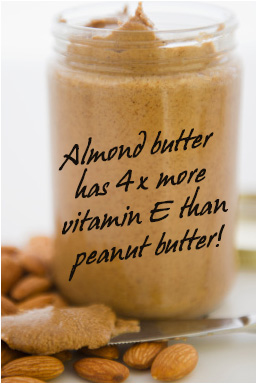
Almond butter has more minerals than peanut butter, more fiber, fewer carbohydrates, and about half the amount of saturated fat. It is packed with vitamin E, potassium, magnesium, iron, calcium, phosphorus, and phytosterols – helping to regulate your body’s blood sugar, lower your risk of a heart attack, and reduce elevated cholesterol levels.

Perhaps I was a bit spoiled or lucky as I fell in love with the very first almond butter brand I ever purchased and tasted. I must confess, I became a little obsessed with new food now a staple in my diet, stocked up in my cupboard and initially eaten a few to several times a week.

If you decide to give almond butter a chance with your own taste buds, below are the almond butters I have tasted and tried. As with any other food item, when selecting an almond butter be certain to read the label. For your healthiest option, choose one that have undergone minimal heat processing and has very little added ingredients.

Barney Butter Almond Butter Smooth
This was the very first almond butter I tasted and remains my absolute favorite. Smooth and creamy, the taste tops any peanut butter I have ever eaten. Ever. It’s typically found in the organic section of the supermarket. Ingredients: almonds, evaporated cane juice, palm Fruit oil, sea salt. For those with allergies, Barney Butter is peanut free and made in an almond only facility. Other almond butters by Barney Butter include: Almond Butter Cocoa Coconut, Almond Butter Crunchy, Almond Butter Honey Flax, Almond Butter Raw Chia, Almond Butter Vanilla Bean Espresso, and Bare Almond Butter Smooth. Nutrients per 2 Tbsp. (32g) serving size: 180 Calories, 140 Fat Calories, 15g Total Fat (1.5g Saturated Fat, 0g Trans Fat), 6g Protein, 100mg Sodium, 8g Total Carbs (3g Dietary Fiber, 3g Sugars).

Jif Almond Butter Smooth

This is my second favorite of the almond butters. Like Barney Butter, no stirring is required and you can simply just start eating it right from the jar. But unfortunately, the Jif Almond Butter contains hydrated vegetable oils, which is an ingredient to be avoided. It’s found with the mainstream peanut butters in the supermarket. Ingredients: roasted almonds, hydrated vegetable oils (rapeseed, cottonseed and soybean), sunflower oil, contains 2% of or less of salt. For those with allergies, it contains cashew ingredients and may contain Brazil nut, hazelnut, macadamia nut and pine nut ingredients. Jif also makes Almond Butter Crunchy and two Cashew Butters, one smooth and one crunchy. Nutrients per 2 Tbsp. (33g) serving size: 190 Calories, 150 Fat Calories, 16g Total Fat (2g Saturated Fat, 0g Trans Fat), 7g Protein, 100mg Sodium, 8g Total Carbs (3g Dietary Fiber, 3g Sugars).

Justin Almond Butter Classic

This almond butter is very nutty and a more earthy and gritty taste. Unlike the other butters, it contains palm fruit oil, which is composed of 50% saturated fat and 50% unsaturated. It’s found in the organic section of the supermarket and also comes in convenient 32 packet sizes perfect for when on the go. Ingredients: dry roasted almonds and organic palm fruit oil. For those with allergies, it may contain trace amounts of peanuts and hazelnuts. Chocolate Almond Butter, Honey Almond Butter Blend, Maple Almond Butter, and Vanilla Almond Butter also made and are available by Justin. Nutrients per 2 Tbsp. (32g) serving size: 200 Calories, 160 Fat Calories, 18 Total Fat (2g Saturated Fat, 0g Trans Fat), 7g Protein, 100mg Sodium, 6g Total Carbs (2g Dietary Fiber, 7g Sugars).

Wegmans Organic Smooth Almond Butter Unsalted

This almond butter is also very nutty and gritty taste, needing to be stirred before using and refrigerated after opening. Of all of the almond butters, this one is my least favorite but perhaps you will feel differently as taste is, after all, a personally preference. It can be found in the organic section in Wegmans’ grocery stores. Ingredients: organic dry roasted unblanched almonds. For those with allergies, it may contain other tree nuts, peanuts and soy. Crunchy also available. Nutrients per 2 Tbsp. (30g) serving size: 190 Calories, 160 Fat Calories, 18 Total Fat (1.5g Saturated Fat, 0g Trans Fat), 5g Protein, 0mg Sodium, 6g Total Carbs (1g Dietary Fiber, 2g Sugars).

So the next time your picking up groceries, pick up a jar of almond butter and give it go as it’s all about finding healthy guilt-free options. A tablespoon tastes delish on whole-wheat toast, is a great kick in your morning oatmeal, adds boost to shakes and smoothies, and of course is yummy when filled in celery and topped on bananas. Enjoy!

Be Fit. Be Strong. Be Well.
Adriana

Share this:

  • Click to email a link to a friend (Opens in new window) Email
  • Click to share on Facebook (Opens in new window) Facebook
  • Click to share on LinkedIn (Opens in new window) LinkedIn
  • Click to share on Pinterest (Opens in new window) Pinterest
  • Click to share on Pocket (Opens in new window) Pocket
  • Click to share on Reddit (Opens in new window) Reddit
  • Click to share on X (Opens in new window) X
  • Click to share on Tumblr (Opens in new window) Tumblr
  • Click to print (Opens in new window) Print
Like Loading...

What’s for Dinner? Italian Night Makeover with Spaghetti Squash

27 Monday Jan 2014

Posted by Adriana Falco in Diet, Nutrition, Recipes, Vitamins

≈ Leave a comment

Tags

Biscotti, Italian Dinner Makeover, Italian Salad, Leafy Green Salad, Spaghetti Squash, Winter Squash

week88For those of you who are pasta lovers, but feel like you can’t just give up the carb-laden food, then perhaps it’s time for a quick makeover with spaghetti squash as your answer.

Found in grocery stores – August through March – in several varieties, spaghetti squash is a cylinder-shaped winter vegetable with inside strands similar to thin strings of pasta. Think capellini or angel hair spaghetti. Yum! The stands are yellower than spaghetti and provides a sweet, mild flavor. Best of all, it can be baked, boiled, microwaved, or slow cooked in a crockpot.

How nutritious is the spaghetti squash? Very! Low in calories (42 per cup), low in fat (> 0.5g per cup), and low in carbs (10g per cup), it’s a great choice for weight-loss or weight-management plans. It is packed with vitamins A, B-6, and C plus the minerals potassium, calcium, phosphorus, magnesium, and sodium.

Ready to try it out? Below is one of favorite Italian dinner lineups for when I’m in the mood to indulge but don’t want the guilt. Make one or all! You can also top off your meal with your favorite bottle of Italian wine, a loaf of fresh whole wheat bread with olive oil, and espresso!

Italian Leafy Green Salad

In a large bowl, combine 2 cups romaine lettuce (torn, washed, and dried), 1 cup torn escarole, 1 cup torn radicchio, 1 cup torn red leaf lettuce, 
1/4 cup chopped green onions, 1/2 red bell pepper (sliced into rings), 1/2 green bell pepper (sliced in rings), and 12 cherry tomatoes. Set aside. Whisk together the 1/4 cup grapeseed oil, 2 tablespoons chopped fresh basil, 
1/4 cup balsamic vinegar, and 2 tablespoons lemon juice. Add salt and pepper to taste. Pour over salad, toss and serve immediately.

Italian-Style Spaghetti Squash

Half 2 pounds spaghetti squash lengthwise and remove seeds. Place cut sides down in glass baking dish. Add 1/4 cup water and cover with plastic wrap. Microwave for 8-10 minutes until tender and cool slightly. Meanwhile in large skillet heat 1 tablespoon of olive oil. Add 1 red onion thinly sliced and cook for 3 minutes until onion is translucent. Add 1 diced zucchini and cook 4-5 minutes. Add 4 diced tomatoes, 1/4 teaspoon salt and 1/4 teaspoon pepper. Simmer for 10 minutes. Using a fork, scrape squash into bowl. Toss with 1 tablespoon olive. Spoon vegetable mixture over squash. Drizzle with more oil if desired. Garnish with 1/2 cup grated Parmesan cheese and 1 lemon sliced. Other option is instead of the vegetables, top with Cucina Antica’s Tuscany Pumpkin Pasta Sauce found online or at a whole food grocery store.

Almond Biscotti with Greek Frozen Yogurt

Preheat the oven to 325°F. Line two baking sheets with parchment paper. Chop 1/2 cup soaked and crisped almonds (pecans, walnuts, pistachios, or hazelnuts can be substituted) coarsely in the food processor or by hand, and set aside. In a dry food processor fitted with the “S” blade, grind 1 1/2 cups of your favorite sweetener (I use stevia) to a very fine powder. Add 1 2/3 cups almond meal, 1 cup arrowroot powder, 1 1/2 teaspoons baking powder, 1/2 teaspoon unprocessed salt, and 2 teaspoons nutritional yeast (optional buttery flavor). Spin it for a minute to a very fine powder. Open the lid, stir the bottom, replace the lid, and grind again until the powder is uniformly fine. To the dry ingredients in the food processor, add 3 eggs (at room temperature), 1 teaspoon guar gum (optional, for slightly less crumbling), 2 teaspoons pure vanilla extract, zest of 1/2 lemon or orange, 1 teaspoon almond extract (optional), and 1/2 teaspoon ground anise seeds (optional). Pulse the nuts in briefly so they’re evenly distributed but not mush. Coat your hands with a bit of coconut oil. Remove the dough from the food processor. Divide it into two equal parts and place on the baking sheets. Shape each piece into a rectangular log about 10 inches long, 2 inches wide, and 1 inch thick at the thickest point. Bake for 20 minutes. If they begin to crack, remove from oven before they crack deeply. Let cool for 20 to 30 minutes in the pan on a rack. With a sharp knife on a cutting board, carefully slice each log diagonally into 1/2-inch-thick biscotti or a bit thicker. Place each piece flat on its side on the baking sheets. Bake for 15 to 20 minutes at 325°F. Turn over each slice and bake for 15 additional minutes, until slightly golden brown on the top. Transfer to a wire rack or a plate to cool. Serve after dinner with Healthy Choice’s vanilla bean Greek yogurt or enjoy with breakfast! Store extras in an airtight container.

A few more tips with the spaghetti squash. When selecting, be certain it is hard and surprisingly heavy for its size. Avoid squash with soft spots and green in color. Once home, store your spaghetti squash in a cool, dry place. You may also choose to freeze. After cutting, wrap the squash in plastic and store it in your refrigerator no more than two days.

Monja!

Be Fit. Be Strong. Be Well.
Adriana
Share this:

  • Click to email a link to a friend (Opens in new window) Email
  • Click to share on Facebook (Opens in new window) Facebook
  • Click to share on LinkedIn (Opens in new window) LinkedIn
  • Click to share on Pinterest (Opens in new window) Pinterest
  • Click to share on Pocket (Opens in new window) Pocket
  • Click to share on Reddit (Opens in new window) Reddit
  • Click to share on X (Opens in new window) X
  • Click to share on Tumblr (Opens in new window) Tumblr
  • Click to print (Opens in new window) Print
Like Loading...

15 Easy Diet Changes that Make a Big Difference

20 Monday Jan 2014

Posted by Adriana Falco in Diet, Health and Wellness, Metabolism, Nutrition, Setting Goals

≈ Leave a comment

Tags

diet, Diet Changes, Healthy Choices

week86Sometimes it’s the little things in life that counts and adds up to make a difference. Or another way to look at it, baby steps people! I’m referring to making small subtle changes to your daily diet to get you started to eating healthier. It’s how I started many years, and what I suggest to those who inquire how I reached my healthy eating levels of today.

Below are 15 simply changes you can do to your diet today that matter and will make a positive difference with your health and well-being.

#1. Eat within one hour of waking up in the mornings. While sleeping, your metabolism slows down, your body temp lowers, and your blood sugar level drops to conserve energy. To restart your engine and lower your risk for weight gain and obesity, eat a balance meal of lean proteins, complex carbs, and healthy fats within an hour of waking.

#2. Chew your food 30-50 times per mouthful. Chewing food thoroughly has several benefits, such as improving your digestion, eliminating bad breath, preventing excessive gas, and strengthening the immune system. It also takes up to 20 minutes for your brain to get the signal that your stomach is full. So between bites, place your utensil down and savor the moment.

#3. Avoid the whites: flour, sugar, salt, rice, potatoes and mayonnaise. Yes, don’t pass the salt, skip the sugar, and avoid white flour and mayonnaise. Yes, this means white pasta, white bread, and baked goodies made with white substances. All of these foods are absorbed quickly and cause a rapid spike in your blood sugar, which can result in weight gain plus is linked to an increased risk of diabetes and heart disease.

#4. Eat protein with every meal. Protein satisfies hunger and boosts metabolism. If you don’t eat enough, your body breakdowns and burns muscle to compensate which you want to avoid. For each meal, consume enough protein fitting the size of your palm; a total daily intake of ~46g for women and ~56g for men depending on your age, situation, and activity level.

#5. Stop eating processed food. Skip the convenience and forget the delish taste. Eating processed food is not worth you ingesting, doing more harm than good, loaded with preservatives, unnecessary carbohydrates, trans fats, extremely high levels of sodium, and often high fructose. Processed meats come full of synthetic chemicals, many of which are potentially carcinogenic. Need more be said?

#6. Pack your lunch. Not only will it save on your wallet, but your body will thank you. If you typically grab fast food or sit down at a restaurant with coworkers or clients, you are most likely eating more fat and calories than you need or realize. Instead, pack your lunch and know exactly what you are eating. It may take extra time in the mornings, but it’s well worth it in the long run.

#7. Don’t eat lunchmeat or hot dogs. Sorry ballpark hot dog fans, this is one treat to avoid. Any meat that is salted, cured, smoked, or preserved with nitrate is considered processed. This includes bacon and sausage. As mentioned in tip #5 above, they are full of synthetic chemicals and are possibly carcinogenic. They are also usually high in fats and salt, which means they are not heart-friendly, either.

#8. Carry and drink fresh H2O. Pass on the sodas and fruit drinks. Instead swig half your body water in water in ounces of water everyday. Not only is water is one of the best tools for weight loss, it flushes out toxins and waste products, reduces the risk of a heart attack and colon cancer in addition to keeping you hydrated, nourishes your skin, and facilitates your athletic activities among other numerous benefits.

#9. Pass on unhealthy trans fats. These are the bad guys, primarily found in foods containing margarine or vegetable shortening, such as fried foods, baked goods, packaged snacks, fast foods, full-fat cheeses, and lard. These man-made fats raise LDL cholesterol levels while lowering HDL cholesterol, increasing your risk of a heart attack, stroke, and possibly type two diabetes. Instead, choose foods with monounsaturated or polyunsaturated fats, including olive and canola oils, almonds and other nuts, seeds, avocados, and fatty fish, such as salmon.

#10. Eliminate red meat, now. Numerous studies year after year show a direct line with red meat consumption to diabetes, heart disease, cancer and other life-threatening conditions. This includes beef, pork, and lamb meats, which are all high in saturated fat and cholesterol. Most are filled with nitrates and have dangerous chemicals when cooked at high temps. Substitute your servings with fish and poultry.

#11. Eat every couple hours. Your body is like a clock. Eating every 2-3 hours will keep your metabolism high and your insulin levels stable, which in return keeps your energy up and your hunger under control. Going long periods without food can result in a breakdown and loss of muscle tissue, resulting in a slower metabolism, and a gorge out on your next meal.

#12. Pack a snack. Ever find yourself hungry when on the go? When this happens and you have nothing on hand, making a quick stop to grab a healthy snack can be challenging as you drive by fast food eateries or are tempted by the aroma of sweet treats when in a shopping mall. So before heading out, take along your favorite protein bar, a small bag of nuts, or grab an apple, pear, or banana to keep your metabolism going and ward off hunger.

#13. Eat fish 3 or more times per week or take a daily fish oil supplement. Protein packed, vitamin rich and low in saturated fat, fish is also great brain food. Most fish, such as salmon, tuna, and trout, contain omega-3 fatty acids, which keep arteries free of blockage, lower blood pressure, reduce inflammation, and aid in brain development and memory. The omega-3s will also decrease your risk of heart disease, stroke, arthritis, diabetes, and cancer.

#14. When your hunger stops, stop eating. No, you do not have to finish all the food on your plate and not after that feel so full you could burst feeling. Goodness knows that many restaurants today super-size their servings. Once your hunger is satisfied, it’s time to put down the fork and ask for a container to take the balance home.

#15. Don’t eat past 7:00 pm. A good rule of thumb to follow is to stop eating 3-4 hours before retiring to bed. After eating, it takes about 6-8 hours or more for food to pass through your stomach and small intestine, depending upon the type. Only a couple of hours after dinner, your body naturally begins preparing for sleep with a reduced metabolism and storage of fat recently consumed. The only calories you body needs are the basics to keep your heart beating, your lungs breathing, and your eyes moving in REM sleep overnight.

I can easily give you another 15 changes to make to your diet, but let’s start with these. Add in daily exercise to the above and you are off to a good starting plan you can follow and build on for the rest of your life.

Be Fit. Be Strong. Be Well.
Adriana

Share this:

  • Click to email a link to a friend (Opens in new window) Email
  • Click to share on Facebook (Opens in new window) Facebook
  • Click to share on LinkedIn (Opens in new window) LinkedIn
  • Click to share on Pinterest (Opens in new window) Pinterest
  • Click to share on Pocket (Opens in new window) Pocket
  • Click to share on Reddit (Opens in new window) Reddit
  • Click to share on X (Opens in new window) X
  • Click to share on Tumblr (Opens in new window) Tumblr
  • Click to print (Opens in new window) Print
Like Loading...

10 Protein Energy Bars Worth Every Bite

09 Thursday Jan 2014

Posted by Adriana Falco in Diet, Nutrition, Top 10 Lists

≈ 4 Comments

Tags

Best Protein Energy Bars, Energy Bars, Protein Bars, Top Protein Energy Bars

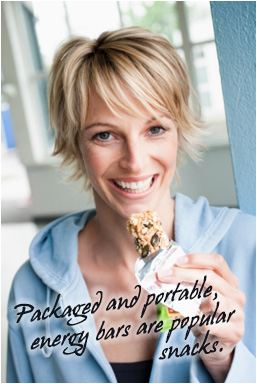
week82Like many of us, I am a person on the go. After waking up in the mornings and before taking off, I go over my day, pack a lunch if it’s a work day, and will grab an energy bar “just in case” I am running late for dinner or when I’m heading out for a physical activity. On occasion, the bar may even be a replacement meal for when I have a large dinner engagement planned or need to watch my calorie intake.

When shopping at my favorite market, there is one side of one isle that dedicated completely to protein energy bars. Five shelves high and unsure of how exactly how long in length, this side aisle is filled with all sorts of bars from crunchy ones, chewy, crispy, crème, gel and gummy like, and ones that, well, are like chowing down on a brick! With so many choices, which one is a girl to choose?

With so many protein energy bars now on the market today, deciding on which one you like best is a personal journey of trial and error based on taste, texture, smell, dietary needs and preferences, and nutritional value. That being said, the following are 10 of my favorite protein energy bars.

Atkins Advantage Meal Bar – Cookies n’ Crème
One of my absolute favorites, this crunchy cookie layer topped with cream and coated in chocolate bar not only tastes great, it will satisfy your hunger! Nutrients: 180 Calories, 80 Fat Calories (6g Saturated Fats, 0g Trans Fats), 15g Protein, 170mg Sodium, 140mg Potassium, 20g Total Carbs (10g Dietary Fiber, 1g Sugars).

Balance Bar – Dark Chocolate Crunch
Chocolate lovers beware! Rich, chewy, and dreamy, get your dark chocolate fix with this delicious gluten-free bar with dark chocolate coating over a crunchy cookie base. Nutrients: 180 Calories, 60 Fat Calories (4g Saturated Fats, 0g Trans Fats), 13g Protein, 190mg Sodium, 150mg Potassium, 20g Total Carbs (4g Dietary Fiber, 12g Sugars).

Clif Bar Natural Energy Bar – Oatmeal Raisin Walnut
Packed with 23 vitamins and minerals and filled with organic rolled oats, walnuts, raisins, and cinnamon, this bar can provide the energy you need for your next adventure! Nutrients: 240 Calories, 50 Fat Calories (.5g Saturated Fats, 0g Trans Fats), 10g Protein, 160mg Sodium, 240mg Potassium, 43g Total Carbs (5g Dietary Fiber, 22g Sugars).

Clif Builder’s Protein Bar – Crunchy Peanut Butter
Containing 40 percent of the recommended daily allowance and packed full of organic peanuts and peanut butter, this crunchy bar will help you recover faster after exercising. Nutrients: 280 Calories, 10 Fat Calories (5g Saturated Fats, 0g Trans Fats), 20g Protein, 370mg Sodium, 140mg Potassium, 30g Total Carbs (2g Dietary Fiber, 23g Sugars).

Detour Runners Bar – Chocolate Chip Cookie
Made with runners in mind who are hard on their knees, this contains whey protein and MicroLactin, a naturally occurring anti-inflammatory derived from milk proteins to improve joint health and function. Nutrients: 200 Calories, 30 Fat Calories (3g Saturated Fats, 0g Trans Fats), 12g Protein, 55mg Sodium, 29g Total Carbs (4g Dietary Fiber, 9g Sugars).

Luna Who Nutritional Bar – Carrot Cake
Is this dessert? Maybe! Regardless, it’s an indulgent cinnamon-spiced bar with carrots, walnuts, white soy chips, and sweet raisins, drizzled with creamy vanilla icing. Yum! Also try White Chocolate Macadamia. Nutrients: 180 Calories, 50 Fat Calories (2.5g Saturated Fats, 0g Trans Fats), 8g Protein, 130mg Sodium, 90mg Potassium, 25g Total Carbs (3g Dietary Fiber, 13g Sugars).

QuestBar Natural Protein Bar – Chocolate Peanut Butter
A bar with none of the guilt! With 20 grams of protein and only 1 gram of sugar this gluten free, this high fiber bar is simply delicious and nutritious. Also try the Chocolate Brownie. Nutrients: 170 Calories, 45 Fat Calories (1g Saturated Fats, 0g Trans Fats), 20g Protein, 340mg Sodium, 380mg Potassium, 24g Total Carbs (19g Dietary Fiber, 1g Sugars).

PowerBar Harvest Energy – Apple Cinnamon Crisp
Filling, delicious, and packed with nutrition, these bars are designed to provide extra energy in a naturally flavored, whole-grain bar. Also try the Peanut Butter Chocolate. Nutrients: 240 Calories, 35 Fat Calories (1g Saturated Fats, 0g Trans Fats), 9g Protein, 140mg Sodium, 200mg Potassium, 42g Total Carbs (5g Dietary Fiber, 20g Sugars).

Power Crunch Protein Energy Bar Original – French Vanilla Crème
If you like cupcakes, then this bar is the one for you! Light and airy, you might not be able to eat just one of these whey protein, crème-filled wafers! Also try the Peanut Butter Crème. Very low glycemic response and diabetic-friendly. Nutrients: 205 Calories, 105 Fat Calories (5g Saturated Fats, 0g Trans Fats), 14g Protein, 75mg Sodium, 115mg Potassium, 0g Total Carbs (1g Dietary Fiber, 5g Sugars).

Promax Energy Bar – Cookies n’ Cream
This yummy bar is my most recent find. High in protein and low in fat, it is quite sizeable and filling enough to get you through to your next meal, unlike most bars with similar nutritional value. Nutrients: 270 Calories, 40 Fat Calories (3g Saturated Fats, 0g Trans Fats), 20g Protein, 250mg Sodium, 250mg Potassium, 40g Total Carbs (1g Dietary Fiber, 30g Sugars).

Is your mouth watering yet? If so, happy snacking!

Be Fit. Be Strong. Be Well.
Adriana

Share this:

  • Click to email a link to a friend (Opens in new window) Email
  • Click to share on Facebook (Opens in new window) Facebook
  • Click to share on LinkedIn (Opens in new window) LinkedIn
  • Click to share on Pinterest (Opens in new window) Pinterest
  • Click to share on Pocket (Opens in new window) Pocket
  • Click to share on Reddit (Opens in new window) Reddit
  • Click to share on X (Opens in new window) X
  • Click to share on Tumblr (Opens in new window) Tumblr
  • Click to print (Opens in new window) Print
Like Loading...

Fitness Apps Worth a Download and a Whirl!

03 Friday Jan 2014

Posted by Adriana Falco in Diet, Exercising, Health and Wellness, Nutrition, Personal Trainer, Running, Sleep, Top 10 Lists, Training, Yoga

≈ 1 Comment

Tags

Health and Fitness Apps, iPad, iPhone

week80Yes, like there is for just about everything else these days, there are apps for fitness. Several. Probably hundreds if I dig far enough. So which one to use? Which ones are the best? Well, as 2014 is off and rolling with many new health and fitness resolutions in sight, there is no better time than now to download one or two of these popular fitness apps to help you stay in shape, on track and on goal. Below are just 10 of them for Apple wireless devices since that is what I use to test and use them!

Fitness Buddy (Buy) – With 1700+ unique exercises, 1000+ HD videos, and a workout journal at your fingertips, it’s no wonder this popular app has received accolades from Gizmodo, ESPN Magazine and even Jay Leno. This app will help revolutionize and revitalize your gym regimen with comprehensive exercises for all major equipment, including barbell, EZ curl bar, dumbbells, kettlebells, resistance bands, and stability balls. By Azumio, Inc. Requires iOS 5.0 or later. Compatible with iPhone, iPad, and iPod touch. Optimized for iPhone 5.

HealthyOut (Free) – I saw this app promoted on GMA and had to immediately go download it and give it a go. Of course, due to the TV appearance, the app crashed with all of the requests. Once in, pre-select your diet style – such as gluten free, high protein, low calorie, vegan, Paleo and even Weight Watchers, Atkins, and more  – then the app will locate area restaurants for eat-in or take-out that meet your nutrition preferences. By HealthyOut. Requires iOS 5.0 or later. Compatible with iPhone, iPad, and iPod touch. Optimized for iPhone 5.

iMuscle (Buy) – If you’re looking to improve or change up your workouts, check out this app which will guide you through 450 different lifts and stretches to create a customized balanced workout without having to hire a physical trainer. There are great illustrations and written instructions for those already familiar with most exercises. By 3D4Medical.com, LL. Requires iOS 6.0 or later. Compatible with iPad 2 and newer.

Lose it! (Free) – This is one of the first health and fitness apps I downloaded to my iPhone. Keep tracking of what you eat, how much of it, and all if it’s nutrient values (including calories) can not be in the palm of your hand. There are a number of name-brand food items or you can add your own. It also takes your daily exercise into account. By FitNow, Inc. Requires iOS 5.0 or later. Compatible with iPhone, iPad, and iPod touch.

MyFitnessPal (Free) – This award-winning app has won accolades for many reasons, including hosting the largest food database of any iPhone calorie counter with over 3,000,000 foods! It is hands-down is one of the best all-in-one calorie counter and exercise trackers with its enormous catalog of foods, meals, and recipes. It even includes barcode scanner for finding packaged foods’ nutritional information. By MyFitnessPal.com. Requires iOS 6.0 or later. Compatible with iPhone, iPad, and iPod touch. Optimized for iPhone 5.

Runkeeper (Free) – Are you a runner or a cyclist? How about a hiker or walker? If so, downloading this GPS app is a must! Filled with motivational cues and an opportunity to connect with workout buddies, this is a great little app to track your cardio. See detailed stats around your pace, distance, and time plus get notified when you hit new personal bests and milestones. By FitnessKepper, Inc. Requires iOS 6.0 or later. Compatible with iPhone, iPad, and iPod touch. Optimized for iPhone 5.

ShopWell – Healthy Diet & Grocery Food Scanner (Free) – Want quick assistance reading food labels to find healthier foods and achieve your nutrition goals? Consistently ranked as one of the top health and fitness apps, with ShopWell all you need to do is scan the bar code and it will reveal nutrition facts panels, calorie count, and ingredients to help you match foods meeting your dietary needs. Scan foods in booth supermarket and at home. By YottaMark, Inc. Requires iOS 4.3 or later. Compatible with iPhone, iPad, and iPod touch. Optimized for iPhone 5.

Sleep Cycle Alarm Clock (Buy) – If you are thinking, “No, I don’t need another alarm,” then you are mistaken. This “intelligent” clock not only wakes you in the lightest sleep, but analyzes your sleep. Getting enough sound sleep is just as crucial to being healthy as a healthy diet and regular exercise. This app uses the accelerometer in your iPhone to monitor your sleep movements in addition to providing metrics about how well you slept. By Maciek Drejak Labs. Requires iOS 5.0 or later. Compatible with iPhone, iPad, and iPod touch. Optimized for iPhone 5.

VigorWay (Free) – This is the first social network designed to give active health and fitness enthusiasts a place to share their journeys and connect with others. Surround yourself in an online world with those who eat, sleep, breath, and believe in your healthy lifestyle! Use the active categories and Geo-Tag system to see the most trending and motivational pictures across the world and get the latest news and articles from the most reputable resources. By Vigor Health & Fitness, LLC. Requires iOS 6.0 or later. Compatible with iPhone, iPad, and iPod touch. Optimized for iPhone 5.

Yoga Studio (Buy) – Voted runner-up in “Best App Ever” Awards 2012 and recommended by MacLife, Fox, MSN, The Guardian, Huffington Post and others, this ultimate yoga app allows users to play, customize, and schedule easy-to-follow HD video yoga classes. Easily create unique HD video classes or participate in one of 30 ready-made yoga classes with HD videos. 20 ready-made pose blocks readily available plus library of over 280 poses with detailed advice and instructions. By Modern Lotus. Requires iOS 6.0 or later. Compatible with iPhone, iPad, and iPod touch. Optimized for iPhone 5.

Remember in the end, all apps are personal choices that best fit you, your fitness lifestyle, and ultimate goals. Select apps that have features, an interface, graphics, and support that meet or exceed your expectations. You may have to try a few before determining which your prefer. If you find others you would like to add to this list, please post!

Be Fit. Be Strong. Be Well.
Adriana
Share this:

  • Click to email a link to a friend (Opens in new window) Email
  • Click to share on Facebook (Opens in new window) Facebook
  • Click to share on LinkedIn (Opens in new window) LinkedIn
  • Click to share on Pinterest (Opens in new window) Pinterest
  • Click to share on Pocket (Opens in new window) Pocket
  • Click to share on Reddit (Opens in new window) Reddit
  • Click to share on X (Opens in new window) X
  • Click to share on Tumblr (Opens in new window) Tumblr
  • Click to print (Opens in new window) Print
Like Loading...
← Older posts
Newer posts →

Adriana Falco

  • About the Blogger
  • Healthcare Disclaimer

Like Us on Facebook

Like Us on Facebook

Enter your email address to subscribe to this blog and receive notifications of new posts by email.

Join 135 other subscribers

Recent Posts

  • Easy and Healthy Peanut Butter Dessert Recipes June 9, 2024
  • The Good, the Bad, and the Ugly Oils You Should Include and Not Include in Your Diet March 4, 2024
  • The Sweet Truth About Sweet Potatoes February 28, 2024
  • Unlocking the Decade Beyond 40: 10 Ways to Maximize Longevity and Well-being January 8, 2024
  • Navigating Holiday Eating December 12, 2023
  • The Statin Conundrum: Why Alcohol and Cholesterol Meds Don’t Mix November 27, 2023
  • Healthy and Scrumptious Desserts for the Upcoming Holiday Season November 20, 2023
  • The Tiny Powerhouse: Unveiling the Health Wonders of Chia Seeds November 13, 2023
  • Unraveling the Enigma: Understanding Frontotemporal Dementia (FTD) November 10, 2023
  • Yoga vs. Mat Pilates: Choosing the Right Path to Mind-Body Wellness November 3, 2023

Search Blog Topics

Categories

  • Abdominal Muscles
  • Anti-Aging
  • Book Review
  • Caffeine
  • Cardio
  • Cycling
  • Diet
  • Exercising
  • Fitness Classes
  • Golf
  • Health and Wellness
  • Healthy Getaway
  • Hearth Health
  • Hiking
  • Metabolism
  • Muscles
  • New Year's Resolutions
  • Nutrients
  • Nutrition
  • Pain Management
  • pain relief
  • Paleo
  • Personal Trainer
  • Pickleball
  • Pilates
  • Recipes
  • Running
  • Setting Goals
  • Skiing
  • Skincare
  • Sleep
  • Sports
  • Superfoods
  • Swimming
  • Top 10 Lists
  • Training
  • Uncategorized
  • Vitamins
  • Weight Training
  • Yoga

Fit Past 40 Archives

Follow @ FitnFun

Tweets by fitnfun

Recent Tags

Abdominal exercise Aerobic exercise American Heart Association Bananas Blueberry Breakfast Caffeine Cardio Caveman Diet Cellulite Chocolate Connective tissue Cookies Dark Chocolate Dehydration diet Dieting DVD Eating Clean Energy Bars Energy Drinks Exercises exercising fast twitch muscle fiber Fat Fat Flush Plan Fitness fitness over 40 fitness past 40 Gym Health Healthy Choices Healthy Desserts healthy living Heart Health Hiking holiday eating Metabolism mindless eating Muscle New Year’s resolutions Nutrition pain relief Paleo Pancakes Peanut butter Personal trainer Personal Training Physical exercise Physical fitness Pickleball Pilate Pilates Pumpkin Recipes Riding Horses Running Running Outdoors Setting Goals Ski Skiing Spaghetti Squash sport Sports Strength training Sweet Potatoes Tennis Travel Weight loss Weight training Wellness Winter Blues Yoga Zucchini Zumba

Archives

Adriana Falco

  • About the Blogger
  • Healthcare Disclaimer

Like Us on Facebook

Like Us on Facebook

Enter your email address to subscribe to this blog and receive notifications of new posts by email.

Join 135 other subscribers

Recent Posts

  • Easy and Healthy Peanut Butter Dessert Recipes June 9, 2024
  • The Good, the Bad, and the Ugly Oils You Should Include and Not Include in Your Diet March 4, 2024
  • The Sweet Truth About Sweet Potatoes February 28, 2024
  • Unlocking the Decade Beyond 40: 10 Ways to Maximize Longevity and Well-being January 8, 2024
  • Navigating Holiday Eating December 12, 2023
  • The Statin Conundrum: Why Alcohol and Cholesterol Meds Don’t Mix November 27, 2023
  • Healthy and Scrumptious Desserts for the Upcoming Holiday Season November 20, 2023
  • The Tiny Powerhouse: Unveiling the Health Wonders of Chia Seeds November 13, 2023
  • Unraveling the Enigma: Understanding Frontotemporal Dementia (FTD) November 10, 2023
  • Yoga vs. Mat Pilates: Choosing the Right Path to Mind-Body Wellness November 3, 2023

Search Blog Topics

Categories

  • Abdominal Muscles
  • Anti-Aging
  • Book Review
  • Caffeine
  • Cardio
  • Cycling
  • Diet
  • Exercising
  • Fitness Classes
  • Golf
  • Health and Wellness
  • Healthy Getaway
  • Hearth Health
  • Hiking
  • Metabolism
  • Muscles
  • New Year's Resolutions
  • Nutrients
  • Nutrition
  • Pain Management
  • pain relief
  • Paleo
  • Personal Trainer
  • Pickleball
  • Pilates
  • Recipes
  • Running
  • Setting Goals
  • Skiing
  • Skincare
  • Sleep
  • Sports
  • Superfoods
  • Swimming
  • Top 10 Lists
  • Training
  • Uncategorized
  • Vitamins
  • Weight Training
  • Yoga

Fit Past 40 Archives

Follow @ FitnFun

Tweets by fitnfun

Recent Tags

Abdominal exercise Aerobic exercise American Heart Association Bananas Blueberry Breakfast Caffeine Cardio Caveman Diet Cellulite Chocolate Connective tissue Cookies Dark Chocolate Dehydration diet Dieting DVD Eating Clean Energy Bars Energy Drinks Exercises exercising fast twitch muscle fiber Fat Fat Flush Plan Fitness fitness over 40 fitness past 40 Gym Health Healthy Choices Healthy Desserts healthy living Heart Health Hiking holiday eating Metabolism mindless eating Muscle New Year’s resolutions Nutrition pain relief Paleo Pancakes Peanut butter Personal trainer Personal Training Physical exercise Physical fitness Pickleball Pilate Pilates Pumpkin Recipes Riding Horses Running Running Outdoors Setting Goals Ski Skiing Spaghetti Squash sport Sports Strength training Sweet Potatoes Tennis Travel Weight loss Weight training Wellness Winter Blues Yoga Zucchini Zumba

Archives

Create a free website or blog at WordPress.com.

Privacy & Cookies: This site uses cookies. By continuing to use this website, you agree to their use.
To find out more, including how to control cookies, see here: Cookie Policy
  • Subscribe Subscribed
    • Fit Past 40 Blog
    • Join 86 other subscribers
    • Already have a WordPress.com account? Log in now.
    • Fit Past 40 Blog
    • Subscribe Subscribed
    • Sign up
    • Log in
    • Report this content
    • View site in Reader
    • Manage subscriptions
    • Collapse this bar
 

Loading Comments...
 

    %d